


Carol Dweck’s Mindset Theory revolves around a simple but profound idea: ‘The view you adopt for yourself profoundly affects the way you live your life’. Her research suggests that our beliefs about our own abilities either limit or empower us.
Some teams thrive on feedback, while others crumble at the mention of “failure”. Some learners dive headfirst into challenges, while others disengage at the first hint of difficulty. Dweck argues that this isn’t down to intelligence, ability, or resources. It’s about mindset.
A growth mindset transforms ‘I can’t’ into ‘I can’t… yet’. That ‘yet’ is the difference between hitting a wall and climbing over it.
This theory has become one of the most influential ideas in modern education and workplace learning. It has also become one of the most contested. In this article, we’ll cover what Mindset Theory actually says, what the evidence does (and doesn’t) show, and how you can apply the useful parts within your organisation.
Learning hats on? Growth mindset engaged? Let’s get started.
Who is Carol Dweck?
Carol Dweck, a prominent American psychologist born in 1946, is celebrated for her influential work on motivation and mindset. Her distinguished academic career includes faculty positions at the University of Illinois, Harvard, Columbia, and Stanford, where she is currently the Lewis and Virginia Eaton Professor of Psychology.
In a 1988 paper, she first introduced the concept of implicit theories of intelligence and personality. These “core assumptions about the malleability of personal attributes” gained widespread recognition through her 2006 bestseller, Mindset: The New Psychology of Success and her popular TED Talk, The Power of Believing You Can Improve.
Since then, Dweck has continued to refine the theory in response to fresh research and criticism, most notably in her 2020 paper with David Yeager clarifying what a growth mindset does and doesn’t claim.
What is Dweck’s Mindset Theory?
Our self-image shapes our world.
Dweck’s Mindset Theory focuses on the idea that our inherent beliefs about our abilities and intelligence dictate our actions and results. These beliefs are, in essence, the architects of our achievements and shortcomings.
Specifically, individuals fall along a spectrum defined by their implicit views of where ability comes from. Those who attribute success to innate talent exhibit a ‘fixed’ theory of intelligence. Conversely, those who credit success to hard work, learning, and perseverance, have a ‘growth’ theory of intelligence.
Note that this is a spectrum, not a binary. In her later work, Dweck has emphasised that most of us hold a mix of both mindsets across different areas of our lives. For example, while you might have a growth mindset about your career, you may have a fixed mindset about your ability to run a marathon or bake a soufflé.
While individuals may be unaware of their mindset, it’s often revealed through their actions, especially when viewed against the characteristics we’re about to explore.
Now, let’s put both mindsets under the microscope.
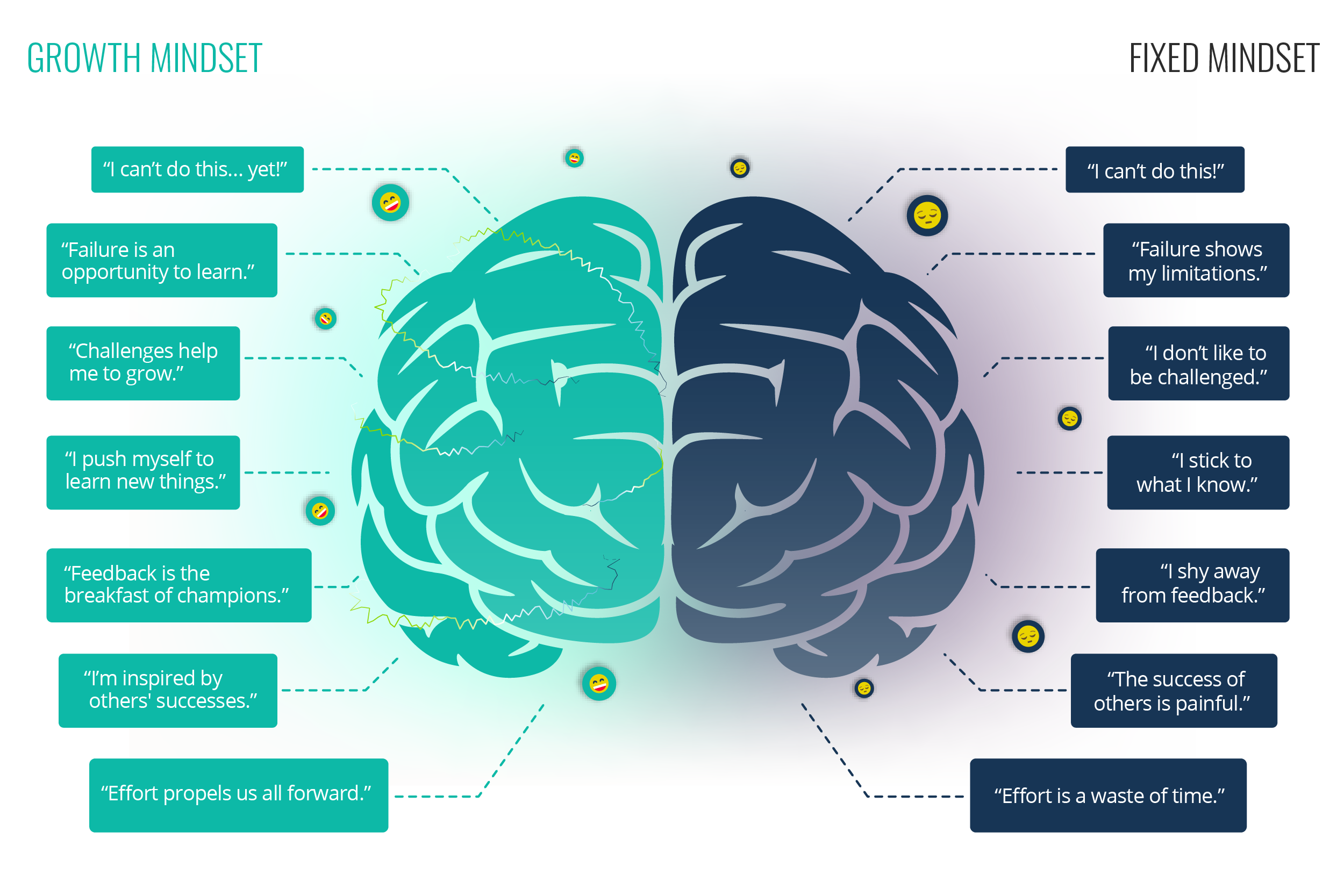
Fixed Mindsets
A fixed mindset hinges on the conviction that intelligence, abilities, and talents are static and unchangeable. Talent is innate and consistently outweighs even the most diligent effort. As you might imagine, these beliefs impose or reinforce certain limitations and constraints.
As Dweck puts it, those who have a fixed mindset believe they “have a certain amount [of intelligence, ability, or talent] and that’s that.” Accordingly, “their goal becomes to look smart all the time and never look dumb.”
In other words, with this mindset, you focus on maximising what you have rather than developing your potential. This has the following consequences:
- Fear of Failure: Failure is seen as proof that you’re just not good enough, rather than an opportunity to learn and grow. As such, it is to be avoided at all costs.
- Avoidance of Challenges: In light of this, those with a fixed mindset tend to avoid difficult tasks, fearing that failure will expose their lack of innate ability.
- Emphasis on Proving Oneself: Instead of stretching themselves and developing new skills, those with fixed mindsets focus on showing off what they already know.
- Ignoring Feedback: Given that intelligence and ability are seen as fixed, constructive criticism can be viewed as a personal attack, rather than valuable guidance.
- Feeling Threatened by Others: The success of others is viewed as a painful reminder of one’s own failings, instead of something to be inspired by.
- Rejecting Effort: Those with fixed mindsets place little value on effort. If you have to work hard at something, it means you’re not naturally good at it.
In other words, a fixed mindset creates a self-imposed ceiling on potential, limiting individuals’ ability to reach their full capability. Just imagine the uphill battle of trying to support these individuals with a structured workplace learning programme.
Growth Mindsets
A growth mindset is the belief that intelligence, abilities, and talents can be developed through dedication, effort, and learning. As our capabilities aren’t fixed, we can grow and improve throughout our lives, fulfilling our potential.
Modern neuroscience supports this idea. Every time we practise a new skill or process new information, the brain physically reorganises itself. We’ll cover the neural evidence in more detail below.
As Dweck notes, those with a growth mindset “don’t necessarily think everyone’s the same or anyone can be Einstein, but they believe everyone can get smarter if they work at it” Here’s a more detailed look:
- Learning from Failure: Failure is not an indictment of natural ability, but an opportunity to learn and grow. Each setback is a stepping stone towards improvement.
- Embracing Challenges: With failure recontextualised, new challenges are now seen as a chance to learn and grow, rather than a potential threat to our self-esteem.
- Emphasis on Improvement: Rather than showing off what they can already do, growth mindset individuals focus on enhancing or developing new skills and abilities.
- Seeking Feedback: Like failure, feedback is seen as an opportunity to learn and grow. As such, those with a growth mindset welcome constructive criticism.
- Inspired by Others: The success of others is seen as something to aspire to. It also validates the role of effort and dedication in achieving success.
- Valuing Effort: Effort is seen as something that’s essential to mastery and progress. This makes it easier to persevere in the face of setbacks and failures.
As a result, a growth mindset empowers individuals to embrace challenges, learn from mistakes, and achieve their potential. It crashes through the self-imposed limitations of fixed mindsets. If adopted at scale, it can help you to create a culture of continuous improvement within your organisation.
The Neuroscience of Growth Mindsets
If our capabilities aren’t fixed, how does the brain actually change? And is there evidence that a growth mindset itself changes what the brain does?
Yes, according to a growing body of neuroscience research. The most influential study comes from Moser et al. (2011), published in Psychological Science.
The Brain’s Response to Failure
Moser and colleagues asked 25 participants to complete a task designed to trigger occasional mistakes (the Flanker task, if you’re interested). While they worked, the researchers monitored their brain activity via EEG, focusing on two specific brainwaves:
- Error-Related Negativity (ERN): This fires the moment we notice an error
- Error Positivity (Pe): Which reflects conscious attention to that error.
The results were striking. Participants with a growth mindset showed a larger Pe response after mistakes than those with a fixed mindset. In other words, their brains paid more attention to errors, rather than turning away from them.
Growth-mindset participants also performed better on trials immediately after an error, suggesting they were learning from their mistakes in real time.
Fixed mindset brains, meanwhile, effectively looked away. The error was flagged (via the ERN) but not consciously processed. As a result, the same mistake was more likely to happen again (and again).
Replicating the Results
Moser’s original work has been extended and largely replicated over the past decade. A 2025 scoping review in Brain Sciences examined 15 neuroimaging studies of growth mindset, using techniques ranging from EEG to fMRI.
Across the studies, the pattern held: growth-mindset learners consistently show distinct neural signatures during error and feedback processing, with heightened attention to mistakes and stronger recruitment of learning-related regions.
The neuroscience is telling us how mindset shapes the brain. What it can’t tell us on its own is how much mindset shapes real-world outcomes like grades, workplace performance, or long-term learning. For that, we need to zoom out to the wider research.
Research into Growth Mindsets
Dweck’s Mindset Theory rests on a body of research spanning nearly five decades. Understanding where it started, and how it has evolved, is essential for anyone applying the theory today.
The Foundational Research (1975-1998)
Dweck’s work began with a series of studies on “learned helplessness” in the mid-1970s. She observed that some children respond to failure by giving up entirely, while others treated the same failure as a challenge. This early puzzle set the stage for everything that followed.
By 1988, Dweck and her colleagues had formalised the idea of “implicit theories of intelligence”: the private beliefs each of us holds about whether ability is fixed or malleable.
A decade later, her research on praise and feedback (Mueller & Dweck, 1998) demonstrated that praising children for their intelligence, rather than their effort, could push them towards a fixed mindset.
Together, these three strands became the theoretical foundation of Mindset Theory as we know it today.
The Landmark Real-World Test: Yeager et al. (2019)
The most important recent study of growth mindset is Yeager et al. (2019), published in Nature. Known as the National Study of Learning Mindsets (NSLM), it remains the most rigorous test of a growth mindset intervention ever conducted.
The study took a sample of 12,490 ninth-grade students across 65 US high schools. These students received either a short online growth mindset intervention (over two brief sessions) or a control condition. The findings were as follows:
- Lower-achieving students who received the intervention earned higher end-of-year GPAs than those in the control group. The average lift was 0.10 grade points.
- Students were also more likely to enrol in advanced maths in the following year.
- Crucially, the effect depended on school context. The intervention worked best where peer norms supported challenge-seeking, and had little effect where peer norms rejected effort.
What the Meta-Analyses Show
Beyond any single study, the honest question is: how well does growth mindset hold up when you look at all the evidence together?
The most influential answer comes from Sisk et al. (2018), a meta-analysis published in Psychological Science that reviewed 273 studies, covering 365,915 participants. Their conclusions were mixed.
- Firstly, overall effects were weak. Across the full body of research, growth mindset accounted for only a small share of variation in academic achievement.
- But it should be noted that effects were stronger for specific groups. Students from low socioeconomic backgrounds, and those academically at risk, benefitted more from growth mindset interventions than average students did.
In other words, growth mindset isn’t a silver bullet. The pattern that emerges is one of nuanced, targeted impact rather than universal transformation.

Growth Mindset in the Workplace
The academic evidence is one thing. What about the impact on real organisations? The workplace research is smaller than the educational literature, but consistent in direction.
Managers, Culture, and Coaching
The most influential workplace study is Heslin, VandeWalle and Latham (2006) in Personnel Psychology. They found that managers with a growth mindset were significantly more likely to coach struggling employees, provide developmental feedback, and support performance improvement than fixed-mindset managers.
In a 2014 Harvard Business Review article, Dweck and colleagues extended the theory to organisational culture. Their surveys of Fortune 1000 companies found that employees at “growth-mindset” companies reported greater support for risk-taking, learning from failure, and innovation, along with higher trust in leadership.
Retention and Resilience
Korn Ferry’s 2025 Workforce Survey found that 78% of employees stay at their organisation because of the learning opportunities it provides. Growth-focused environments have become a competitive necessity for retention.
Meanwhile, Siu et al. (2025) in Stress and Health introduced the idea of a dual-focused growth mindset: the belief that both oneself and one’s work conditions can be improved. Employees with this mindset showed higher resilience and well-being, particularly through post-pandemic workplace change.
Mindset Theory Misconceptions
So, does this mean we can all change the world if we apply a little elbow grease?
Well, Dweck has always been keen to emphasise that a growth mindset is not “just about effort.” In fact, praising effort without linking it to effective strategies can be counterproductive. Strategic application always beats a hard-working but unfocused approach.
As she notes, a growth mindset “is about telling the truth about a student’s current achievement and then, together, doing something about it.” It’s the right kind of effort that counts.
This theory also suggests that we need to be careful about where we direct our praise. Lauding intelligence can lead to the development of a fixed mindset and harm motivation. Likewise, praising aimless effort can lead to bad or ineffective habits.
Instead, we should focus on encouraging a love of new challenges, learning opportunities, and constructive feedback. This empowers individuals to become less reliant on external validation and more invested in their personal growth.
We should also note that a growth mindset doesn’t mean ignoring reality. This theory can be misused to pressure individuals to constantly improve, leading to burnout and stress. Instead, we should focus on shifting towards a growth mindset when it’s beneficial.
Finally, watch out for what Dweck herself calls “false growth mindset”: the tendency for individuals or organisations to declare themselves growth-oriented without actually applying the principles. Saying you value effort, feedback, and challenge is not the same as behaving as though you do.
With this in mind, let’s now examine how Dweck’s Mindsets can be applied to the world of learning and development (L&D).
How to Cultivate a Growth Mindset in Your Organisation
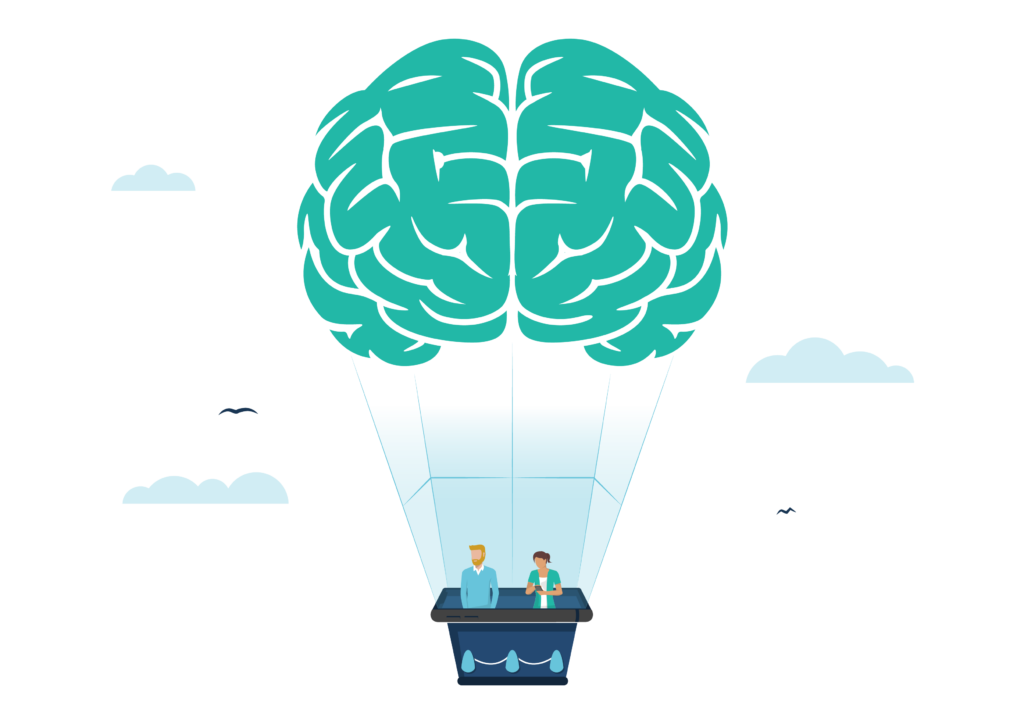
Dweck’s research suggests that roughly 40% of people naturally possess a growth mindset. Imagine the transformative impact on your organisation’s competitiveness if you nurtured a growth mindset in a greater percentage of your employees.
Here’s some tips to get started:
- Leadership Buy-in: Forging a growth mindset within your business starts at the top. Your leaders should actively seek out new learning opportunities, acknowledge their own mistakes, and embrace challenges. This provides a powerful model for employees to emulate.
- Organisational Values: Integrate growth mindset principles into your organisation’s values and communication channels. Wherever possible, emphasise the importance of learning, development, and embracing challenges. This should be a natural part of your organisational culture.
- Growth Goals: Encourage your teams to set growth-oriented goals that challenge them to develop new skills and expand their capabilities. These goals should stretch your audience while remaining realistic and attainable. We have more guidance on this topic here.
- Embrace Failure: Create a safe space where your employees feel comfortable taking risks and making mistakes without fear of punishment or judgement. Shift the focus of your performance reviews to concentrate on growth and encourage open communication and feedback.
- Reward Effort: Recognise and reward employees for their efforts, persistence, and willingness to grow. With that said, be mindful of the potential for pressure and burnout. Provide support and resources to help employees manage stress and maintain a healthy work-life balance.
You’ll also need to use positive language throughout your communications to emphasise effort and promote a growth mindset. Avoid language that reinforces a fixed mindset, such as labelling individuals as ‘talented’ or ’smart’.
Growth-Oriented L&D Programmes
While organisational support is crucial, L&D professionals and learning practitioners have a direct impact on fostering a growth mindset within individuals. You are the mindset masters! Here are some key strategies to consider:
- Fuel Continuous Learning: A growth mindset thrives on readily available learning opportunities. Without them, it’s like a plant without sunlight, unable to flourish and reach its potential. Ensure your audience has access to a variety of learning resources, such as online courses, eLearning units, mentoring programmes, and so on.
- Learning Environment: Evaluate your learning environments and platforms. Are they safe and supportive environments where learners feel comfortable taking risks and seeking out feedback? Do your learning materials offer sufficient challenge to maintain engagement and spark curiosity?
- Embrace Challenges: Offer challenging activities and assignments that encourage your learners to stretch their abilities and step outside of their comfort zones. Provide support for those who fall behind, and create opportunities for knowledge sharing and collaboration.
- Provide Feedback: Learners with a growth mindset crave feedback and further opportunities to improve. As such, ensure constructive criticism and reflection is built into your learning pathways. This will help your audience to identify areas for growth and refine their strategies.
- Mindset Training: Bring your learners on board by explaining the benefits of a growth mindset. Provide workshops or training sessions that educate employees about the concepts of fixed and growth mindsets, and offer clear strategies to support your learners.
Keep in mind that organisations, teams, and individuals with deeply ingrained fixed mindset beliefs can be resistant to change. That’s why cultivating a growth mindset is an ongoing process, not a one-time event. Ensure you keep the momentum up.
There’s also the challenge of effectively measuring mindset, as it’s a complex and internalised belief system. If conducting surveys or interviews isn’t feasible, focus on analysing performance data and observable behaviours.
Consider metrics such as goal attainment, project completion rates, and skill development progress. Improvements in these areas are a hallmark of a growth mindset.
Criticisms of Dweck’s Mindset Theory
Mindset theory has attracted more scrutiny than perhaps any other idea in modern educational psychology. An honest look needs to engage with it. First up, let’s review the data.
The Replication Problem
The most significant recent critique comes from Macnamara and Burgoyne (2023), a meta-analysis of 63 growth mindset intervention studies. Across all 63 studies, the overall effect on academic achievement was d = 0.05. When the analysis was restricted to the six highest-quality studies, the effect dropped to d = 0.02.
Both figures are statistically weak and, after correcting for publication bias, non-significant. The authors concluded that the apparent effects on academic achievement are likely “attributable to inadequate study design, reporting flaws, and bias.”
Closer to home, the Education Endowment Foundation (EEF) ran a Changing Mindsets trial with over 5,000 UK schoolchildren. The result: no statistically significant effect on academic attainment.
The Measurement Problem
Most mindset research relies on self-report questionnaires. Learners are asked whether they agree with statements like “you can always substantially change how intelligent you are”. Learners may know what the “right” answer is (growth mindset), report it, and then behave in fixed-mindset ways in practice.
This is closely tied to the “false growth mindset” problem noted above, and makes it hard to know whether an intervention has shifted mindset or just shifted what learners say.
Dweck’s Own Acknowledgement
To Dweck’s credit, she has engaged with the criticism. In their 2020 American Psychologist review, Yeager and Dweck acknowledged that “mindset effects are meaningfully heterogeneous across individuals and contexts”.
In plain terms, this means that mindset interventions work in some places, with some learners, under some conditions. They don’t work uniformly.
None of this invalidates the underlying idea that beliefs shape behaviour. But the evidence suggests treating growth mindset as a set of principles to apply thoughtfully, rather than a scalable intervention with reliable outcomes.
Final Words
Growth Mindset Theory is one of the most influential ideas in modern learning and development. It’s also one of the most contested. Somewhere between “just believe you can improve” and “the meta-analyses don’t support it” sits the honest picture.
Learners’ beliefs about their abilities matter. Managers with a growth mindset coach more effectively. Companies that support risk-taking and learning from failure retain their people. These findings are real.
Just don’t chase growth mindset as if it’s a magic switch. Build it into the culture of how your organisation learns. Focus on the principles that hold up: strategic effort, honest feedback, safe failure, and real challenge. Get those right, and mindset shifts as a natural consequence.
Who knew believing in your own potential could be so powerful?
Thanks for reading. If you’ve enjoyed this content, please connect with me here or find more articles here.
The Impact Suite is built to nurture growth mindset cultures at scale. Book a demo to see how, or download our Learning Theories & Models guidebook to go deeper into the research.