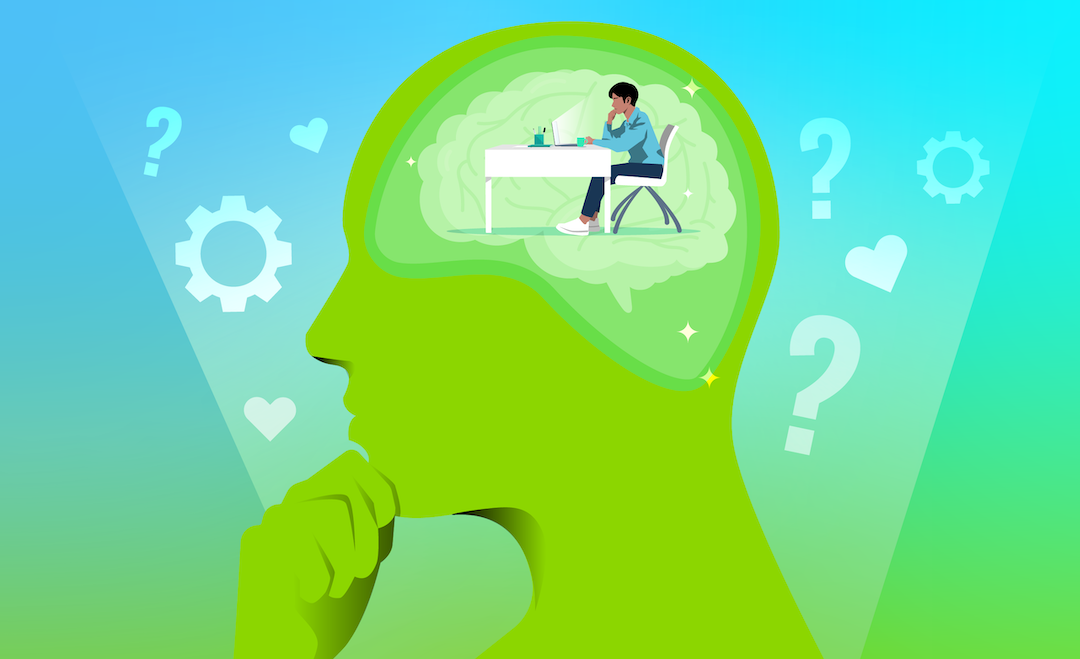


What if you could flip a switch in your learners’ brains that made them wired to pay attention and hungry to remember? Good news — that switch already exists. It’s called curiosity.
This is the same primal drive that sent us to the moon and compelled somebody to invent sandwich bags for toasters (thank you, human ingenuity!). As researcher Jonathan Schooler puts it, ‘Curiosity is a psychological super virtue’.
For learning professionals, curiosity isn’t just a nice idea; it’s the master key to true engagement. So, let’s unlock the neuroscience behind this superpower and give you the playbook to weaponise it within your programmes.
Feeling curious? Then let’s get started!
What is Curiosity?
At its heart, curiosity is the itch to explore and the hunger for what’s around the next corner. It’s not just a passive state of wonder. It’s an active, urgent drive to resolve uncertainty and close a knowledge gap.
- It’s the compulsion to gently shake a wrapped present to guess its contents.
- It’s the irresistible urge to click on a “You won’t believe what happens next!” headline.
- And it’s the persistent question, “What if we tried it this way?”
This forward-leaning drive is a fundamental part of being human. As Aristotle notes, ‘All men by nature desire to know’. He was right. We are hardwired for it. And this desire is what transforms learning from a chore into a pursuit.
It’s also the engine of innovation. Or as another of our favourites, John Dewey puts it, “Eagerness for experience, for new and varied contacts, is where wonder is found.”
So, in a nutshell: curiosity is a primal, neurobiological drive to resolve uncertainty, powered by our brain’s own reward system. It fuels exploration and turns us from passive recipients into active, engaged participants in our own learning journeys.
Types of Curiosity
Simple enough, right? Well, let’s mix things up. Psychologists distinguish between two different forms of curiosity, based on its origin and goal. For L&D, the crucial distinction lies between the spark that ignites interest and the impulse that powers deep learning.
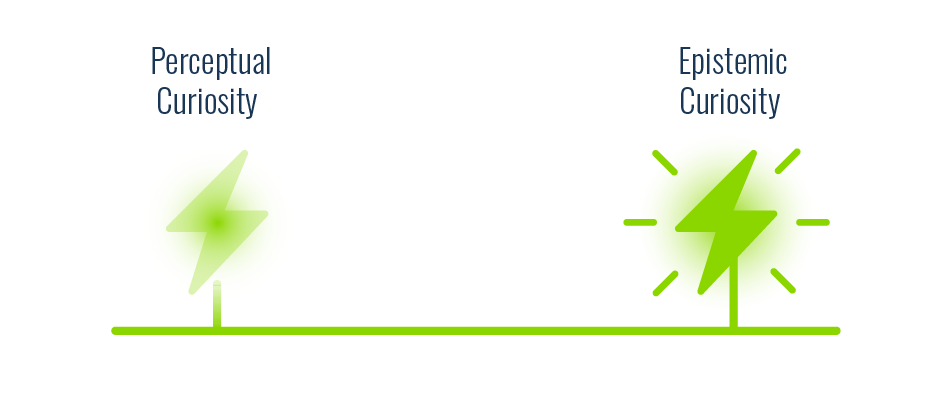
- Perceptual Curiosity: This is our reflexive, “what’s that?” response. Driven by novelty, it’s the instinct to investigate a strange sound or glance at a sudden movement. This makes it a powerful tool for grabbing attention, but like a spark, it can fade quickly once the initial novelty wears off.
- Epistemic Curiosity: This is the deep, intellectual “I need to understand” drive. It’s propelled by our desire to resolve cognitive tension and fill in incomplete knowledge structures. It generates a sustained source of intrinsic motivation that persists until the knowledge deficit has been resolved.
This brings us to the force behind curiosity itself: the information gap.
Information Gap Theory
Formulated by psychologist George Loewenstein in 1994, information gap theory provides an elegant model for what curiosity is and how it works. It suggests that curiosity is the cognitive itch that surfaces when we become aware of a gap in our knowledge.
Think of it like this:
- Current State: Your current knowledge is like a completed puzzle.
- Trigger: Curiosity is only triggered when the brain detects a specific, missing piece.
- Drive State: This awareness creates a feeling of deprivation and tension.
- Resolution: The only way to close the gap is to find the missing information.
In other words, curiosity isn’t a vague desire for novelty. It’s about what you realise you should know, but don’t. It’s the conscious awareness of that gap that generates the powerful urge to fill it.
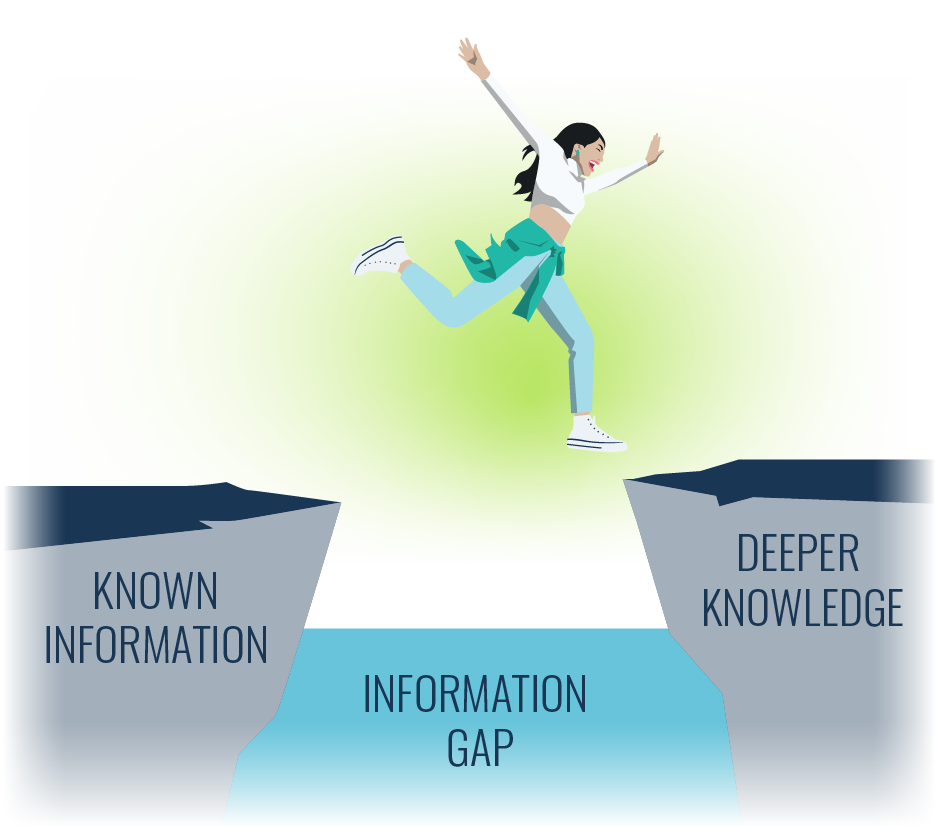
As with the Zone of Proximal Development, the information gap must be strategically sized. After all, it’s called a gap for a reason. If it were a gaping chasm, it would overwhelm the learner. And if it were a narrow crevice, it would just get ignored.
Your goal is to design a gap that invites a leap, not a plunge or a blind stumble.
The Curiosity Crisis
Remember being four years old? Your full-time job was asking “Why?” On average, children ask a staggering 107 questions per hour. They are curiosity machines, hardwired to explore and understand their world.
Unfortunately, somewhere between childhood and our first performance review, that engine of inquiry often sputters out. We trade “Why is the sky blue?” for “That’s just the way it is”. But in doing so, we sideline one of our most powerful drivers of success.
Indeed, a closer look at the data confirms it: our organisations are facing a demonstrable ‘curiosity gap’.
- According to Harvard Business School, a mere 24% of employees feel curious in their jobs regularly.
- Worse still, 70% face barriers to asking more questions at work.
- And while 83% of C-level executives say curiosity is encouraged, only 52% of employees agree.
There’s a clear disconnect at the top. Instead of encouragement, the message seems to be: “keep your head down and do your job”. This is a real problem, because while curiosity is dwindling in practice, the evidence for its benefits continues to mount.
The Benefits of Curiosity
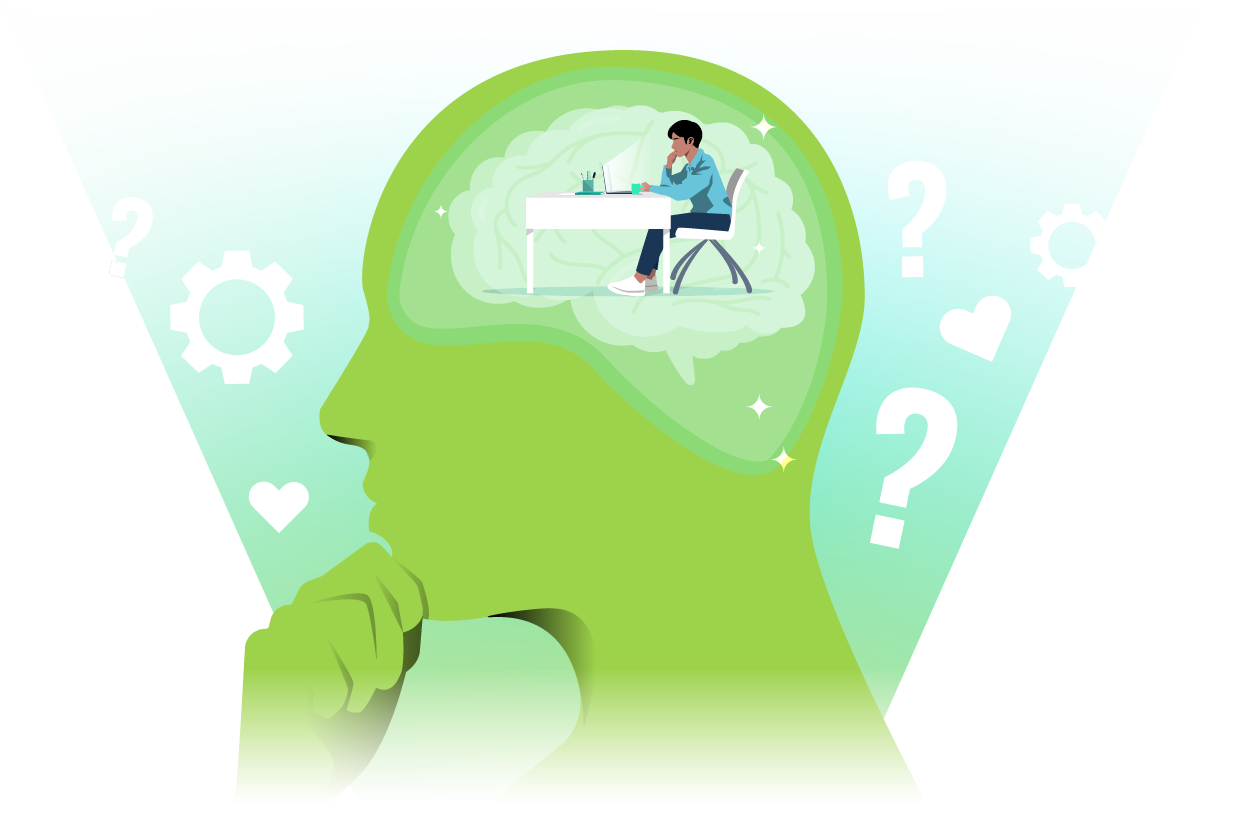
What is it that sets the most successful people apart? It’s not always raw intelligence or sheer hustle.
After interviewing 525 CEOs and leaders, Adam Bryant pinpointed their unique ‘X-Factor’: Applied Curiosity. This is the relentless habit of attempting to understand and make sense of the world around you.
It echoes Michael Dowling’s concept of C.Q. (Curiosity Quotient): “Instead of their I.Q., I want to know [employee’s] C.Q. … To what extent are you focusing on figuring out how to improve whatever it is you’re going to be doing?”
This line of thinking is not just academic. It’s backed by concrete organisational data. For example, a SAS survey found that managers directly attribute curiosity in their teams to:
- Greater efficiency & productivity (68%)
- More creative thinking & solutions (68%)
- Stronger collaboration & teamwork (58%)
- Greater employee engagement (58%)
- Improved flexibility & adaptability (56%)
And the benefits for individuals are just as profound. Studies have linked curiosity to a host of different superpowers. Indeed, research confirms that curious people:
- Operate with greater empathy (Hartung, 2011)
- Connect on a deeper level (Kashdan, 2013)
- Excel at problem-solving (Oregon State University, 2016)
- Handle rejection better (Kawamoto, 2017)
- Unlock higher creativity (Schutte, 2019)
- Report increased happiness (Lydon-Staley, 2019)
- Benefit from a superior memory (Fandakova, 2020)
- Have healthier brains (Yan Ni, 2025)
In fact, curiosity is so powerful it can even override our natural tendency to avoid mental effort. A 2025 study suggests it’s a force strong enough to make us seek out challenging and even unpleasant outcomes for the sheer sake of learning.
These benefits aren’t just feel-good outcomes. They translate directly into better learning. Let’s see how.
Curiosity and Learning
Way back in 2011, a landmark study argued that intellectual curiosity should be considered the third pillar of academic performance, standing proud alongside intelligence and effort. The research revealed a strong link between this ‘hungry mind’ and increased openness to new experiences and academic achievement.
The best part? This isn’t a fixed trait you’re born with. Like a growth mindset, curiosity is a cultivable superpower that studies have shown can be developed and strengthened over time.
Better still, a UC Davis study demonstrated that when participants were in a state of high curiosity, they were 15-20% better at remembering the target answer later. Intriguingly, their memory for entirely unrelated, incidental information also improved by 25%.
In other words, a curious brain is a sponge, primed to absorb everything. A recent meta-analysis of 40 studies confirms the impact at scale. Fostering curiosity leads to a 25% increase in engagement and a massive 30% improvement in learning outcomes.
These aren’t minor gains. They are a transformational shift in learning potential.
The Neuroscience of ‘Wanting to Know’
So, what’s actually happening inside our heads when we get curious? It isn’t a vague, unknowable phenomenon. It’s a defined neurological process — a concrete, observable mechanism that we can intentionally activate to prime the brain for optimal learning.
This process is supported by neuroplasticity, our brain’s remarkable ability to rewire and strengthen its neural pathways throughout our lives. Curiosity is the catalyst for this rewiring, making lifelong learning and enduring behavior change possible.
But there’s more to curiosity than this. A lot more. Let’s dive in!
1. The Dopamine Connection
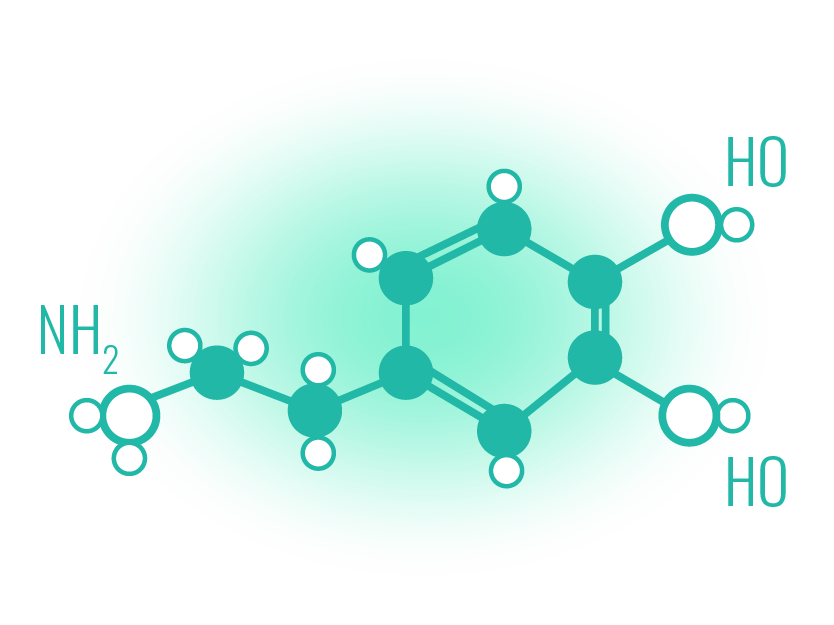
As we’ve seen, curiosity isn’t passive. It’s a drive state, similar to hunger or craving, that the brain feels compelled to resolve. In turn, knowledge becomes like an oasis in a vast, empty desert. It offers the only source of relief for the brain’s intellectual thirst.
With a curiosity gap established, the brain immediately activates its internal motivational engine: the reward system.
- The Anticipatory Reward: The brain anticipates how good it will feel to fill the knowledge gap. This anticipation triggers the release of dopamine — the neurotransmitter associated with motivation and reward satisfaction (not just pleasure).
- The Anticipation Circuit: Dopamine is primarily released from midbrain structures like the ventral tegmental area (VTA) and the substantia nigra, into the nucleus accumbens. This generates a powerful, almost unavoidable focus on the missing piece of information.
- The Motivational Fuel: Crucially, this dopamine surge acts as fuel for intrinsic motivation, making the active search for the answer feel inherently rewarding and necessary. It’s neurologically difficult to remain passive in this state, ensuring the learner is energetic in their attempts to close the gap.
2. The Hippocampus and Memory
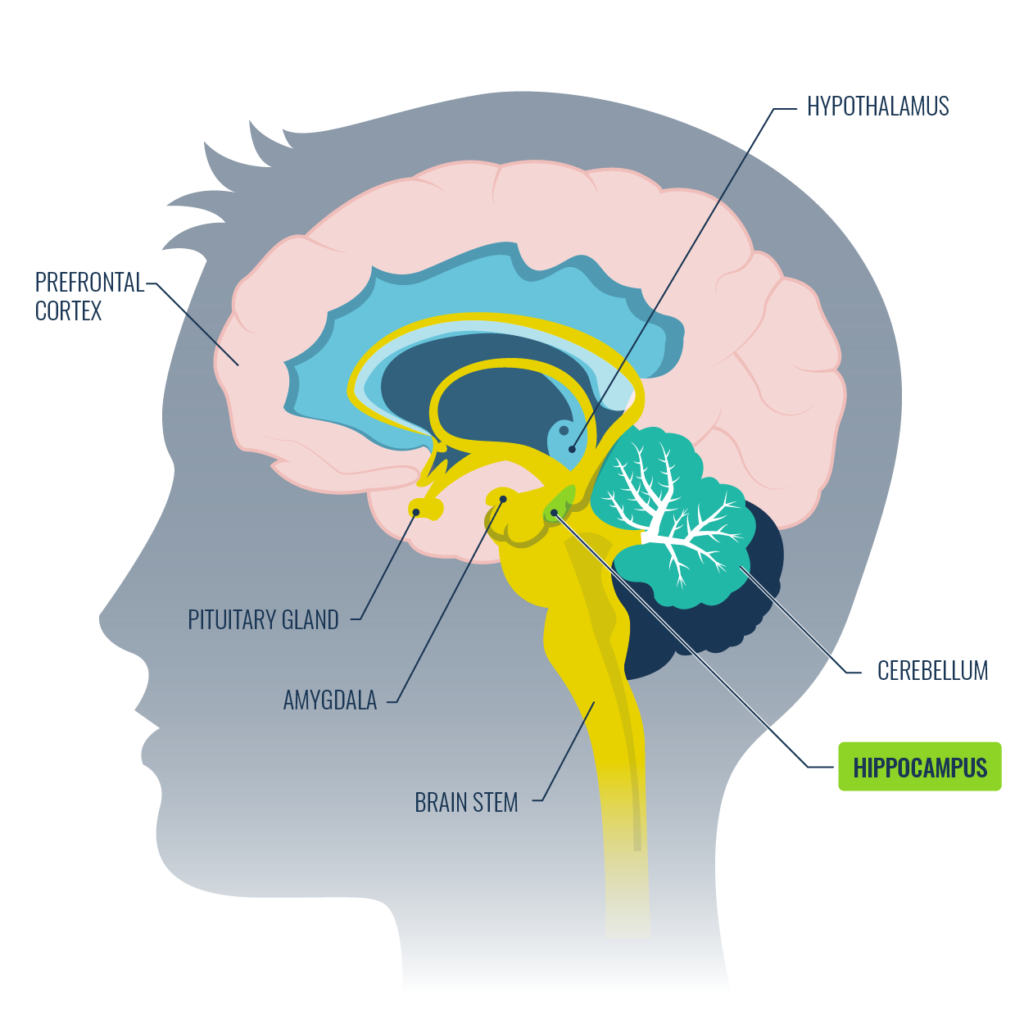
This is where the magic happens for learning. The dopamine surge doesn’t just motivate you, it actively prepares your memory centres for action. At this stage, the hippocampus joins the party. This is the area of the brain involved in forming new long-term memories.
Indeed, research shows that when the brain is in a state of high curiosity, the hippocampus becomes significantly more active and engaged. This connection essentially opens the floodgates for learning, ensuring that information is not just processed, but successfully encoded into long-term memory.
Moreover, this enhanced state of readiness means the brain becomes a temporary learning utopia. As we’ve seen from the research above, peak levels of curiosity also boosts retention for unrelated and incidental information. This spillover effect could have a major impact on your training programme.
The prefrontal cortex then takes the lead, sustaining focus on the hunt for information. Intriguingly, this state of curiosity has also been shown to dial down activity in the amygdala, the brain’s alarm system. In turn, it makes us less fearful and more open to new experiences.
How to Create Curiosity
Okay, enough theory. Let’s get practical. How do you actually use this science to design learning experiences that promote curiosity? The strategies detailed below use the information gap to spark both quick interest and deep thinking. Let’s dig in!
1. Start with the ‘Why’

First impressions are everything. The opening minute of your training sets the tone. You’ll need to hook your learners with curiosity here or risk losing them for good. So, ditch the dry agenda and kick things off with a provocative question that makes them think.
As a result, you’ll frame the entire session as the solution to a puzzle they now care about. Make the question relevant to their real-world challenges, and you won’t just have their attention — you’ll have their investment. Here are some great examples:
| What Not To Do ❌ | What To Do ✅ |
|---|---|
| This module covers handling customer objections | Why do most common rebuttals actually make pricing objections worse? |
| You will learn about phishing attack red flags | What’s the tiny detail in this ‘HR’ email that gives the hacker away? |
| This session will explore submitting an expense report | What’s a simple way to speed up expense report submission by 20%? |
2. Master the Cliffhanger
Remember that feeling of needing to watch “just one more episode”? That’s the power of an unresolved story — a cognitive itch known as the Zeigarnik Effect. Our brains hate loose ends and crave closure.
You can harness this effect in your learning materials. Instead of presenting information as a complete package, structure it as a series of reveals. For instance, end your micro-scenarios or video segments at a critical point. Here’s an example:
“Claire clicked ‘send’ on the report. It was the biggest mistake of her quarter. What did she overlook? Find out after this short checkpoint.”
3. Preview the Payoff
Think of the most effective movie trailer. It won’t show you the full plot. Instead, it shows you just enough to make you need to see the film.
Apply this principle to your learning programme. Before diving into a complex module, offer a 30-second preview that highlights a surprising insight or counter-intuitive finding. Consider using a quick video clip, a bold statistic, or a provocative quote.
This will create a targeted information gap, priming the brain’s reward system. In turn, you’ll transform learners from passive viewers into an active audience eager for the main feature. Get your popcorn ready!
4. Lower the Stakes
Curiosity can be a vulnerable state. It requires admitting “I don’t know”, which the brain often interprets as a risk. To counter this, design low-stakes sandbox environments where learners can safely explore and experiment.
By offering unconditional positive regard and minimising real-world consequences, you’ll dial down amygdala-driven fear. This frees up the prefrontal cortex for active engagement and creative problem-solving.
Just remember to provide meaningful feedback at every stage of the journey. Offering a safety net won’t eliminate the need for guidance.
5. Make it Social
Curiosity is contagious. Design prompts that tap into our innate drive to know what others think and have experienced. Then use your learning platform’s social features (think forums, polls, or live chats) to create collaborative information gaps.
Try prompts like:
- What’s the most creative workaround you’ve used for this problem?
- What’s the biggest hidden challenge in our current process?
- Share a time when a piece of feedback completely changed your thinking.
This strategy creates a living, breathing knowledge base that connects each learner with the collective wisdom of their peers. How could curiosity not thrive in an environment like this?
6. The Expert’s Toolkit
Ready to move beyond the basics? We’ve compiled three advanced strategies to help you refine your design approach. These insights will help you to fine-tune your learning programme and maximise the cognitive benefits of curiosity.
- Goldilocks Gap: Remember, effective information gaps follow the Goldilocks Principle. The level of cognitive tension must be just right. Not so small it’s boring and not so large that it’s paralysing. Your goal should be to create an intriguing stretch that makes the effort to learn feel rewarding.
- Radical Reflection: Build in structured reflection prompts to help learners consolidate their insights. For instance, “List three things you still want to know about this process.” This shifts the learner from a consumer to an active seeker.
- Super Spillover: Since the curious brain is highly activated and receptive, treat the moment of peak curiosity as a valuable window for learning. Strategically insert important, unrelated information at this stage. In doing so, you’re using the spillover effect to dramatically boost memory encoding for those details.
By applying these rules and vigilantly avoiding common curiosity killers (like information overload and high-stakes pressure), you’ll build learning environments where curiosity thrives. Good luck!
Final Words
So, to recap: curiosity isn’t an abstract concept or a mysterious trait. It’s a concrete, dopamine-driven mechanism that can be studied and understood. And in doing so, we can fuel innovation and make our learning interventions stickier.
By mastering the art of the information gap, you’re not just delivering content; you’re handing learners the key to their own reward system. Consequently, you’re swapping a passive audience for an army of eager detectives, ready to rise to the occasion.
And in a world that never stops changing, that’s not just a nice-to-have-skill, it’s ready-made career armour. Now, it’s over to you. Go design the sparks that light those lifelong questions!
Thanks for reading. If you’ve enjoyed this content, please connect with me here or find more articles here.
Curiosity grabs attention, but what keeps it? Our guide, The Science of Learner Engagement, arms you with proven strategies to transform fleeting interest into deep, durable learning habits. Download it now.