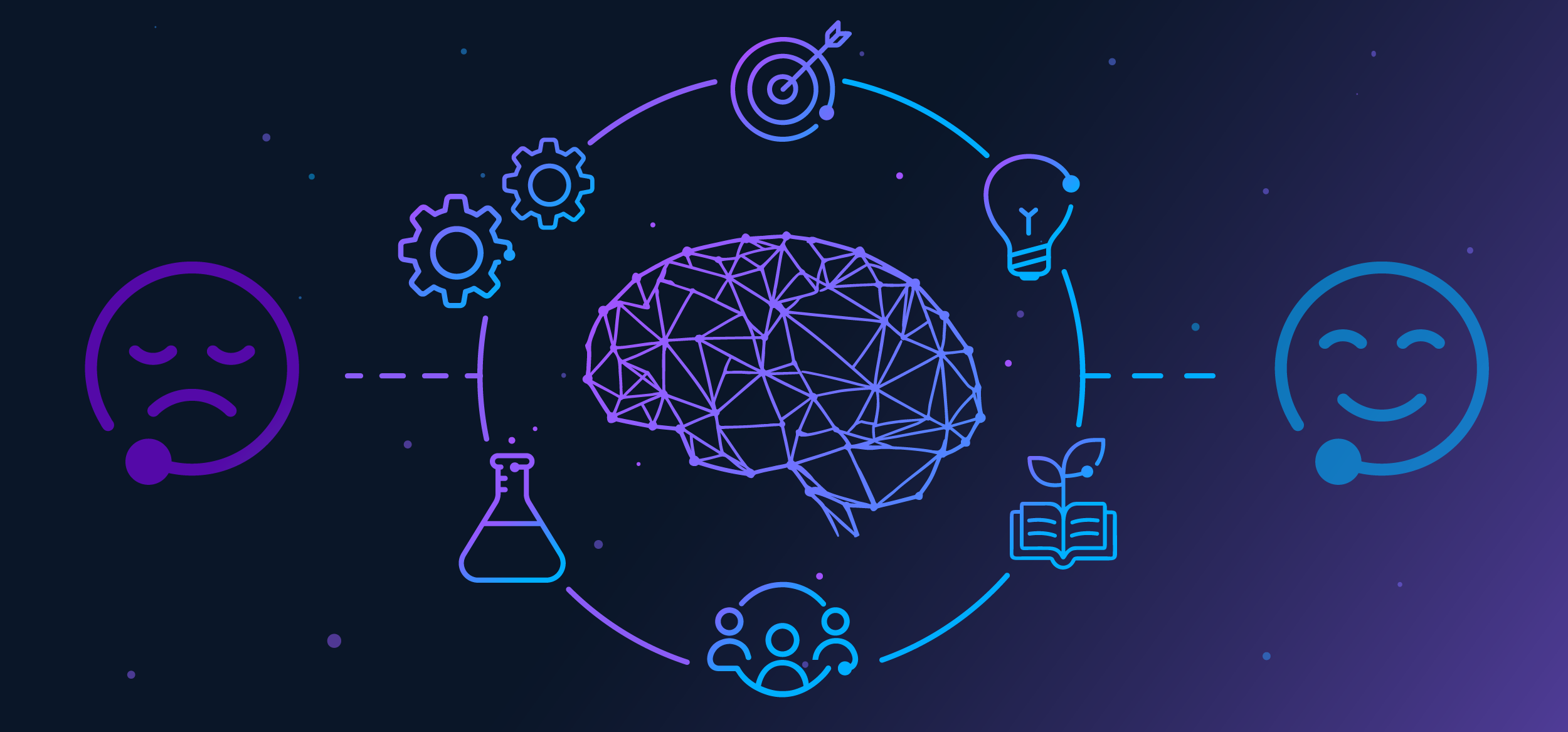


Imagine, if you will, a learning strategy that actually suits our busy lives, and easily distracted minds. Enter microlearning, arguably L&D professionals’ most agile and effective weapon in the ongoing battle against the relentless forgetting curve.
Forget the familiar frustrations of dwindling attention spans, cognitive overload, and unrealistic schedules. Microlearning is designed not just to acknowledge today’s realities, but to thrive within them.
In this guide, we’ll not only define exactly what microlearning is, we’ll also break down its key advantages and acknowledge its limitations. Plus, we’ll equip you with actionable tips to implement your very own powerful microlearning strategy.
Ready? Then let’s prove that small can be mighty!
What is Microlearning?
Your learners are busy. They’re spinning plates, putting out fires, and racing between meetings. In fact, research by Josh Bersin reveals that employees have just 24 minutes per week to spare for formal learning. Yikes!
In other words, expecting learners to set aside hours for traditional training isn’t just unrealistic, it’s unsustainable. Thankfully, there’s a smarter, more agile vehicle for development: microlearning.
At its core, microlearning is an educational strategy that delivers content to learners in bite-sized portions. Each microlearning experience is designed to be easily digestible while satisfying a clear learning objective. Think of it as a quick, energising knowledge boost, rather than an overwhelming feast of information.
Psst. Wanna find out more about microlearning’s even shorter sibling? Click here.
How Long Should Microlearning Be?
So, what’s the magic number when it comes to length? Two sources give useful indicators, and they disagree in a revealing way.
Asked what they actually prefer, learners lean longer than you might expect. Surveying 150 employees at a Malaysian university and a training provider, Shabadurai and colleagues found:
- <3 minutes: 5% prefer this duration.
- 3-5 minutes: 19% prefer this duration.
- 5-7 minutes: 40% prefer this duration.
- 7-10 minutes: 25% prefer this duration.
- >10 minutes: 11% prefer this duration.
Practitioners draw the line differently. The ATD asked 144 talent development professionals for the maximum length that still counts as microlearning, and the average answer was 13 minutes. Asked for the ideal rather than the ceiling, the average came down to 10 minutes. Finally, asked which length was most effective, 59% picked 2-5 minutes.
So the people building microlearning think shorter works better, and the people receiving it would quite like a bit more. This is why the ATD’s conclusion is the right one to land on. As they note, microlearning “should not be tied to a particular length of time. Instead, it should be as long as it needs to be to achieve the learning goal.”
No longer and no shorter.
The Key Characteristics of Microlearning
Microlearning isn’t just about being short (although that’s a big part of it). It’s built on a specific set of principles that help to maximise learner engagement and knowledge retention. With this in mind, here are the key characteristics of microlearning:
- Bite-Sized: Each microlearning experience is intentionally brief. They’re designed to fit into the flow of a busy day. They respect your learners’ time and work with modern attention spans, rather than against them.
- Laser Focused: Similarly, each microlearning experience tackles a single, clearly defined learning objective. This means there’s no room for fluff, deviation, or tangential information.
- Format Agnostic: From short videos to interactive quizzes and snackable infographics, microlearning thrives in any format that delivers knowledge quickly and efficiently.
- Super Convenient: Because of their brevity, microlearning experiences are easy for learners to consume whenever suits them best. This convenient approach can be handy for providing just-in-time support.
As these characteristics should make clear, microlearning is not simply chopping up lengthy eLearning courses into smaller segments. Instead, successful microlearning experiences should be designed from the ground up to be concise and focused.
Microlearning Examples & Formats

As we’ve seen, microlearning isn’t a one-size-fits-all approach. It’s dynamic and adjustable in line with your learning goals. The beauty lies in its versatility, with countless formats to match any learning objective or audience requirement.
Need some inspiration? Here are just a few ways that microlearning can come to life:
- Short Videos: Brief educational videos that can be used to explain topics, demonstrate processes, or provide overviews of key concepts.
- eLearning Modules: Digital learning units that cover a specific topic through a combination of text, visuals, and interactive activities.
- Interactive Quizzes: Assessments that help learners to check their understanding and gather useful feedback.
- Infographics & Diagrams: Visual representations of information that are designed for quick and easy interpretation and understanding.
- Short Articles: Brief written pieces that focus on a specific topic or idea. You could even argue that this article is an example of microlearning.
- Podcasts & Snippets: Short audio recordings or isolated clips that learners can listen to for information. Think soundbites, rather than full lectures.
- Simulations & Scenarios: Digital tools or environments where learners can practise skills and apply knowledge in a simulated space.
- Job Aids & Checklists: Concise resources that provide step-by-step guidance or reminders for completing specific tasks.
An Aptly Short History of Microlearning
The practice of delivering information in small, digestible chunks is arguably as old as learning itself. From ancient hunters sharing survival tips to medieval apprentices mastering crafts one technique at a time, we’ve always learned best in focused bursts.
The terminology itself is far more recent, and the story usually told about it is wrong. You will often read that the first published use of “microlearning” was in 1963, in Hector Correa’s The Economics of Human Resources. The book is real. However, the word isn’t in it.
The term “microlearning” turns up throughout educational journals from 1980 onwards. What’s new is using microlearning as a named approach, which appears to have started with researchers at the University of Innsbruck in 2004.
Today it’s close to universal. The ATD’s 2025 research found that only 7% of organisations don’t use microlearning, with reported use up 28% since 2017. There’s a catch, though. Most of those organisations said microlearning accounts for less than a quarter of their learning programmes. Adoption is near-total. Depth isn’t.

Why Microlearning Works
There’s a reason why chocolate bars are segmented. They’re designed in easily breakable chunks for simple enjoyment. Similarly, as the old saying goes, ‘there is only one way to eat an elephant: a bit at a time’.
The same principle applies to learning. Complex topics are far more effectively tackled in smaller, focused segments. That’s because microlearning aligns with the fundamental principles of cognitive science and how our brains best absorb and retain information.
Let’s now examine these scientific underpinnings to help us better understand microlearning’s effectiveness.
- Dwindling Attention Spans: Research led by Gloria Mark at UC Irvine tracked how long people stay on a single screen before switching away. In the early 2000s that averaged about 2.5 minutes. By 2020 it was 47 seconds. This is not evidence that our capacity to concentrate has shrunk, but if you’re designing learning that has to survive on a work laptop, you should be aware of this number.
- Reducing Cognitive Overload: Our working memory has a limited capacity, generally estimated at 3 to 5 information ‘chunks’. Bombarding learners with lengthy and complex training sessions can easily overwhelm this capacity and hinder learning. Microlearning, in contrast, is designed to respect this cognitive bottleneck. It does this by only ever presenting learners with a manageable amount of information.
- Utilising Spaced Repetition: Microlearning and spaced repetition go hand-in-hand. After all, spacing only works if learners return to material, and nobody returns to a 60-minute course five times. The effect is measurable. When Voice and Stirton gave physics undergraduates a spaced-practice web app, those who used it in a spaced way scored an adjusted mean of 70% in the end-of-module exam, against 64% for students who crammed with it, and 61% for those who never used it.
- Smarter Application: Many microlearning formats, such as interactive quizzes and scenario-based exercises, ask learners to retrieve information rather than simply review it. When Karpicke and Roediger had students learn 40 Swahili-English word pairs, those who kept being tested recalled 80% a week later against 36% for those who kept restudying. Same material, same study time, different outcomes.
The Benefits of Microlearning

Now that we’ve cracked the science behind microlearning’s success, let’s examine how this powerhouse approach can transform your world (and that of your learners).
Here are the benefits of this approach, as we see them:
- Measurably Better Scores: Microlearning’s central claim now has direct evidence behind it. Senandheera and colleagues pooled five controlled studies covering 654 students and found microlearning groups scored 12.6 points higher on post-tests than those taught conventionally.
- Large Effect Sizes: In the one area with a proper body of trials, the effect size is large. A meta-analysis of 10 studies and 743 learners found microlearning beat traditional lectures on English speaking scores at a standardised effect of 1.43, which is very large by education standards.
- Learners Say They’ll Use It: In an evaluation of the Uppsala Monitoring Centre’s microlearning modules, 98.5% of learners said they would be able to put what they had learnt into practice, and nearly all said they would recommend the module to colleagues. With 550 professionals responding, that’s a striking figure for corporate training of any kind.
- Smarter Fit: Your learners aren’t sitting around twiddling their thumbs. LinkedIn Learning found 49% of learners say they don’t have time to learn at work, and a survey of 1,600 people found nearly 1 in 3 can only focus on a task for 10 minutes or less before getting distracted. Microlearning is arguably the only approach that caters for this reality.
- Improved ROI: Think about how much quicker it is to build a punchy 10-minute module than a full 6-hour training epic. Ray Jimenez, who developed the 3-Minute eLearning method, estimates it makes development roughly 3x faster and cuts costs by about 50%. These are his own figures, but the cost logic is hard to argue with.
The Limitations of Microlearning
While we’ve sung microlearning’s praises, it’s important to recognise that it’s not a universal solution to all your training challenges. After all, when you keep modules short and focused, you run the risk of oversimplifying topics that deserve more nuance and depth.
As such, microlearning is not ideal for complex topics that require in-depth exploration, refined understanding, or extensive theoretical frameworks. For example, here are a few cases where you might want to pump the brakes on this approach:
- Technical deep dives (think coding architecture)
- Behavioural shifts (habits don’t change in 5 minutes)
- Multi-layered skills (like leadership programmes)
- Compliance nuances (especially with legal ramifications)
In many of these scenarios, microlearning may operate better as a supplement to more comprehensive methods like eLearning modules, workshops, or on-the-job training. As ever, you should always consider your learning objective and maintain alignment with Bloom’s Taxonomy.
How to Implement Microlearning
So, hopefully by now you’re convinced of the power of microlearning and are ready to unleash its awesome potential across your organisation. That’s great! To help you get started, here’s a step-by-step microlearning implementation guide:
- Define Your Objectives: Any good learning programme, regardless of size or scale, starts with a clear goal in mind. As such, identify the specific learning objectives you want to address with your overall approach and each individual module. And don’t forget to connect the dots by tying these objectives to broader organisational goals.
- Know Your Audience: Next, get to know your learners on a deeper level. Consider their roles, responsibilities, time constraints, skill gaps, and learning preferences. This will also help you to identify specific moments of need, where microlearning can provide a welcome boost.
- Select Use Cases: Consider where short, focused learning bursts might have the biggest impact. Prime candidates often include employee onboarding, sales enablement, product training, process refreshers, and so on. You just need to ensure that your training content can be effectively broken down into standalone modules.
- Find Your Format: With your learning objective and use case in mind, you’re now well placed to select your content format. The microlearning examples discussed above may spark some ideas. Remember to select formats that are easily accessible and engaging across different devices.
- Build Your Content: With the groundwork laid, you’re now ready to brief your instructional designers or start building your content yourself. Keep each module tightly focused on a single, clearly defined learning objective and aim for a concise duration of 3-10 minutes. Focus on getting straight to the point and avoiding jargon!
- Test & Optimise: Before you roll-out your microlearning approach across your entire organisation, start by testing it with a small user group. Use this opportunity to track key training metrics and solicit feedback from both learners and stakeholders alike. This data can be invaluable for refining your training initiatives in the future.
Turbocharging Your Microlearning Approach
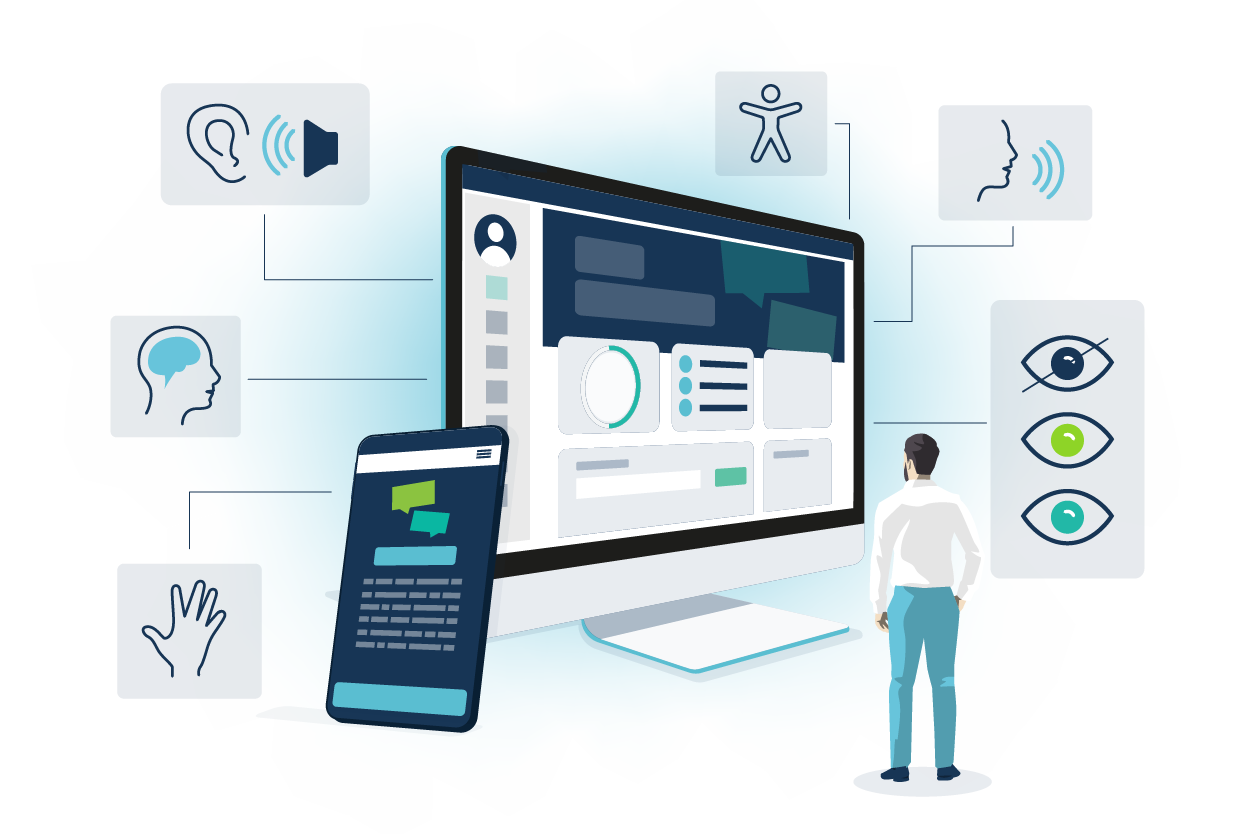
While well-designed microlearning on its own is effective, strategically deploying technology and modern learning trends can significantly amplify its impact. With this in mind, here are our top tips for turbocharging your microlearning approach.
- Learning Technology: Modern learning platforms, like learning management systems (LMSs), provide the perfect home for your microlearning content. They also offer access controls, robust tracking mechanisms, and integrate seamlessly into your existing learning ecosystem and workflows. To empower learners wherever they are, you may wish to explore the mobile-first approach detailed below.
- Mobile Learning: Microlearning and mobile learning are the perfect match. After all, 5.78 billion people now use a mobile phone, 70% of the world’s population, and smartphones account for 87% of the handsets in use. We tend to pick those devices up in short, focused bursts. So embrace mobile-first design and deliver learning that fits the micro-moments throughout the day.
- Game Mechanics: Gamification can also help to supercharge microlearner engagement levels. By weaving in game elements like experience points, unlockable badges, and friendly leaderboards, you add a powerful meta-layer of motivation to incentivise your audience. As a result, your learners won’t just be completing microlearning modules, they’ll be chasing true mastery.
- Social Learning: Learning shouldn’t always be a solo mission. Integrating social learning elements and collaborative tools into your microlearning strategy can help to foster a sense of community and knowledge sharing. The evidence for peer learning is strong: the EEF’s review of 145 studies puts peer tutoring at six months’ additional progress, and finds it works best for consolidating learning rather than introducing it, which is exactly microlearning’s job.
- Flow of Work: The most effective microlearning becomes an invisible ally, seamlessly embedding itself within your learners’ daily workflow. Seek to provide access to relevant learning resources within the tools and platforms they already use, at the precise moment they need them. The inherent brevity of micro-content makes it a valuable asset for time-sensitive learning situations.
Final Words
There we have it. The ultimate proof that great things come in small packages. By delivering your training in focused, bite-sized portions, you empower your learners to consume, retain, and apply information more effectively.
As we’ve seen, this can have an awesome impact on your training programmes. Whether you’re seeking to boost engagement, combat the forgetting curve, or just looking to meet your learners where they are (on their smartphones), it’s clear that microlearning packs a powerful punch.
Now the power is in your hands. So, are you ready to embrace the potential of small, focused learning and achieve big results?
Thanks for reading. If you’ve enjoyed this content, please connect with me here or find more articles here.
Eager to explore even more ways to connect with your learners? Download our free guide, ‘150 Learner Engagement Tips‘ and supercharge your engagement strategy now!