
 From learning on-the-go to the rise of microlearning: the mobile revolution has changed the way we learn forever!
With constant accessibility, we can now demand what training we want, when we want it.
On average we spend 5 hours a day on our smartphones. This is why mobile learning has taken off in such a big way.
With mobiles being such a big part of our lives, L&D professionals should use them to coordinate training and to engage learners.
What Is Push Learning?
Push learning is a traditional learning technique where learners are informed of what to learn, usually in a given timeframe.
Conventional classroom styled learning is probably the most recognised example of push learning. But, it also includes scheduled sessions of online learning or training that are pushed to learners on an LMS.
What Is Pull Learning?
Pull learning puts the learner in control of what they learn and when they learn it. Pull learning is a type of on-demand learning whereby the experience is tailored to the learner’s needs. The focus is on autonomy and learners taking ownership of their training.
How Can We Balance Push and Pull Learning in the Mobile Era?
As mentioned, both push and pull learning are integral to a successful learning campaign. So how can you be sure that both are well represented?
Push Learning and Mobiles
1. ‘My Things To Do’ Section
Admins on Growth Engineering Learning App can push content towards learners via the ‘My Things to Do’ section.
This includes eLearning downloads, educational videos, or induction material such as compliance training. Basically, anything the admin/content curator chooses to push!
2. Push Notifications
Push notifications are small messages that direct and inform learners. They have become popular with the rise of mobile apps.
Why? Because notification remind learners of which modules to consume next. They can inform users of newly added material and they can advise learners of any updates to the app.
3. Blended Learning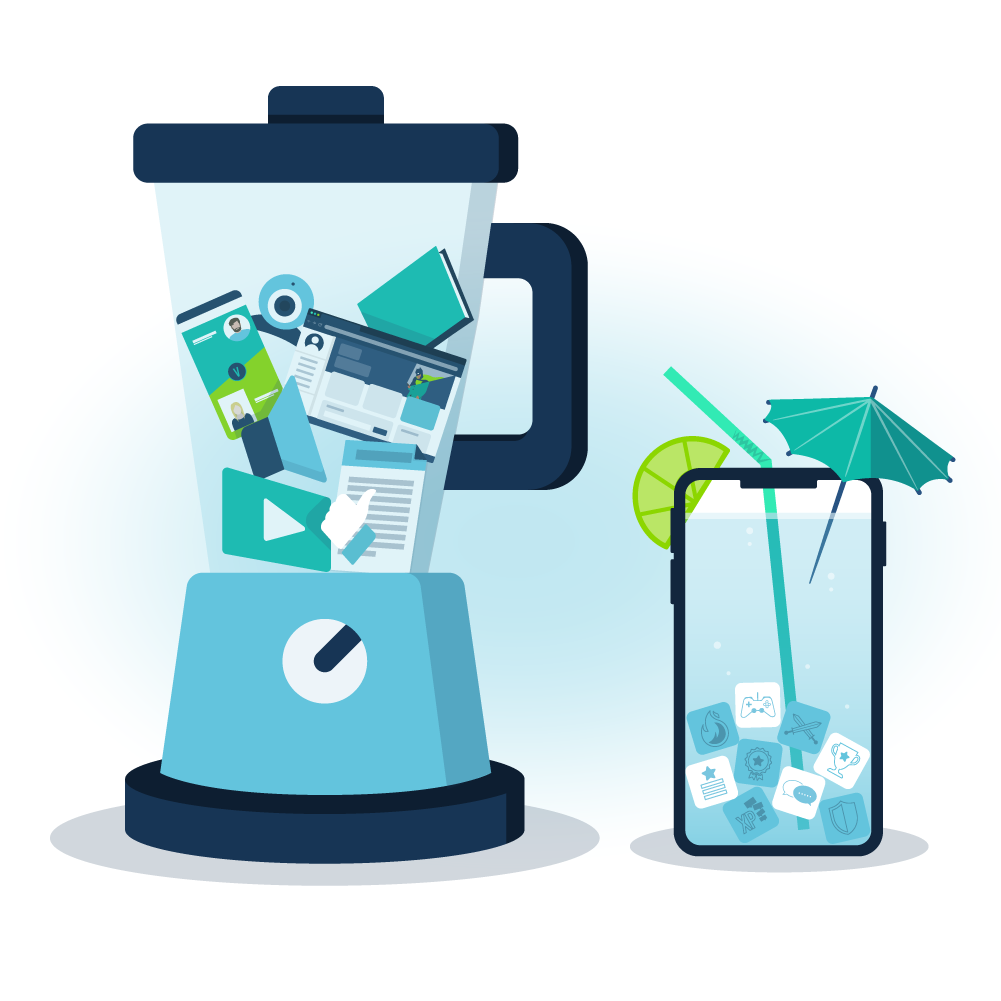
Blended learning is the process of mixing eLearning with traditional classroom based learning.
For instance, you can use Growth Engineering Learning App in unison with your instructor-led training. Admins can run live assessments with real-time performance reports, harvesting the best of both worlds.
4. Assessments and Tests
Admins are able to create assessments and tests via Growth Engineering Learning App which can be pushed to the learner to complete.
Completed tests can be analysed to uncover any knowledge gaps. According to the results, admins are able to push relevant content to the learner.
Pull Learning and Mobiles
1. Accessing Content from The Library
By simply carrying smartphones around, learners are able to access a whole library’s worth of eLearning content! The beauty of this is that it’s a bespoke source of eLearning which is available 24/7. Content can include videos, PDFs, audio files, PNGs, documents and much more.
2. Asking the Experts
The Experts area is a form of social learning on Growth Engineering Learning App. As you’ve probably guessed, it’s an area where learners pose questions to subject connoisseurs, such as marketing or sales.
The Q&A’s are public on the expert wall. This means that if the expert leaves your organisation, you’ll have minimal knowledge loss. This type of pull learning is the gift that keeps on giving, as the stored Q&A’s become a knowledge bank for all employees.
3. Gamification
Gamification is the application of game mechanics to non-gaming environments. Anything that keeps learners coming back for more is a great example of pull learning.
We use gamified features such as leaderboards, experience points and virtual badges to engage learners. The more competitive the learner is, the more they’re pulled in!
4. Narrative
Adding narrative to content is a fantastic way of incorporating learner engagement: the secret ingredient to pull learning. By weaving compelling stories into your eLearning, you’ll keep learners coming back again and again!
Having access to narrative-based learning on your mobiles means that learners can be entertained AND informed on work commutes etc.
Final Words
The freedom that mobiles have gifted us with permits us to practice anytime/anywhere learning. This is a big reason why pull learning has been steadily rising. Our learning experience is now tailored to us.
Mobile learners have access to a library full of content at their fingertips, as well as a wealth of skilled experts. Nonetheless, push learning is still hugely relevant, as guidance and structure will always be needed where learning is concerned.
Push and pull learning are both well represented on smartphones because of one simple finding: Admins mainly use push learning: Users mainly use pull learning.
Put the two together, and you’ve got yourself a recipe for learning success!