
Technology in the classroom increasingly feels like a given. In a few short years, we’ve gone from whiteboards and flipcharts to interactive smartboards and a bring your own device culture.
However, some people think this move to modern tech is something not all learners will respond to.
Different learners need different kinds of stimulation in order to retain what they’ve learnt. You likely notice it all the time. Some learners are better at online assessments than the workshop presentations; some are quiet in the workshops; some are outspoken; others bided their time until they could wax lyrical about their favourite topic.
People are different. That’s just a fact of life.
Using technology in classrooms and workshops – i.e. creating an interactive classroom – makes the learning content accessible and enjoyable for all kinds of learners. We’ve put together some ‘learner types’ and how technology can engage them in their classroom learning:
 The Disengaged Learner
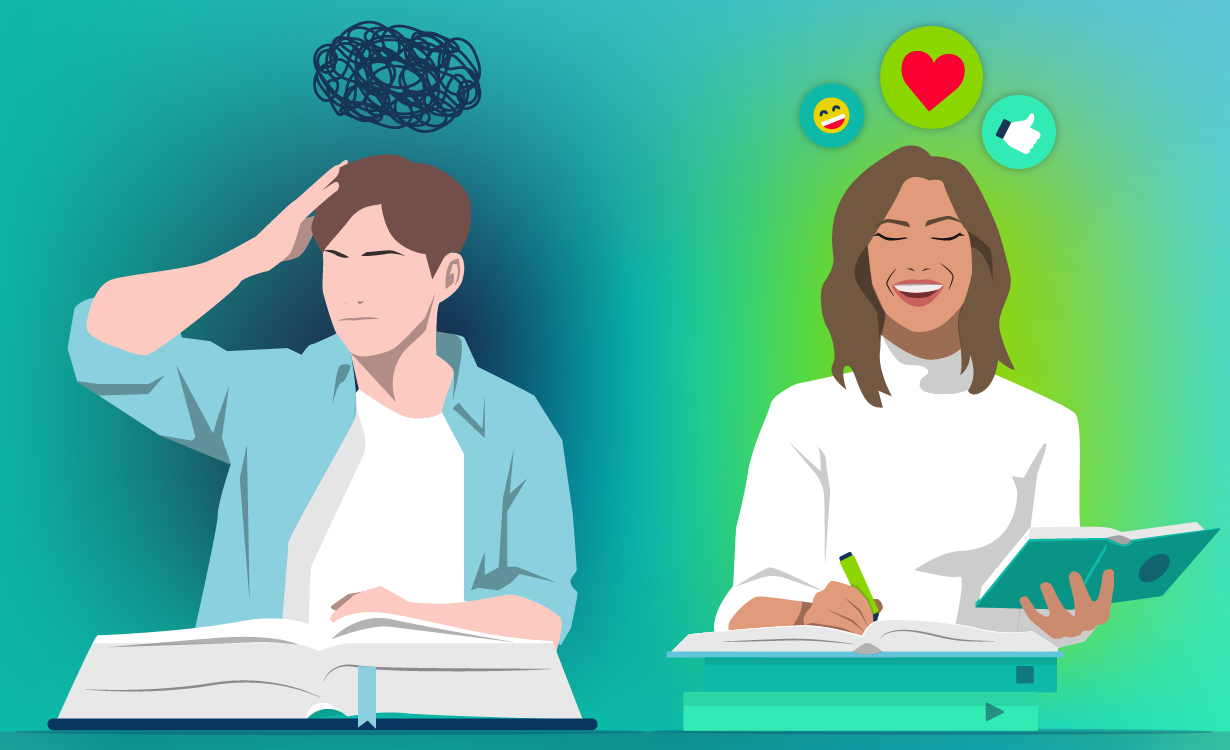
Well, actually, disengaged learners aren’t really a ‘type’ of learner at all – they represent the disengaged, demotivated learner. No one is truly a disengaged learner at heart. They become one through poor training, boring learning techniques and a lack of stimulation. All kinds of learners can become like zombies when the training fails.
Technology is what can cure the Zombie virus and turn students into Active learners (more on them later!).
Watchers
Learners in this group learn best when they observe. They watch other people and can copy or imitate them. In practice, this could be watching their mechanic change a tyre and then replicating it the next time they get a flat. In a classroom setting, these learners are very visual – they’ll learn better watching a video or a presentation than discussing a theory with their fellow learners.
Doers
The Doers are active – they’re not comfortable sitting by passively and watching their trainer, and they find videos distance themselves too much from the learning content. These guys and girls wouldn’t wait until they had a flat tyre to try out what they learnt – they’d get their mechanic to teach them how to do it then and there.
Thinkers
Ah, the thinkers. Similar to Watchers, they are happy to sit back and observe – but they also consider it vitally important to have ‘thinking time’. Rather than watching a video and then going straight into the next topic, Thinkers will learn more when they are given the opportunity to take a step back and mull over what they’ve learnt.
Listeners
While Watchers learn by – duh! – watching, Listeners find they learn best by letting sounds wash over them. They probably have high attention to detail, a great memory and are able to multitask.
Solo Artists
Some of us are naturally more social than others, so it stands to reason that this preference will be seen in their learning, too. Solo Artists don’t need to bounce ideas off fellow learners or discuss the topic in groups to cement their understanding. Instead, they’ll go off on a learning journey on their own, picking up new information and a deeper understanding on their solo voyage.
Talkers
Just as some people prefer learning on their own, others thrive on interaction with other learners. They understand things best when they can talk about them, bounce ideas around, state their case and talk about any issues they’ve having trying to grasp the learning content.
 Active Learners
When learners are engaged, enthralled, motivated, captivated and happy, they’ll break out of the Zombie mould and become Active learners. Taking an active role in learning means to strive for a deeper level of understanding, to seek out new life and new civilizations—sorry, that’s Star Trek—to seek out new topics of interest and to help others on their own learning journeys.
All types of learners can be Active – Active Watchers, Active Talkers, Active Listeners. It’s all to do with the motivation behind the learning: the aim of Active learners is to improve their knowledge and change their behaviours. It’s exactly what we’re aiming for. It’s the epitome. It’s perfection. And it’s wholly attainable when we bring technology into the classroom.
Final Word
The holy grail of learning is to craft a culture of happy, engaged learners. Want to find out more about how you can do that? We have an infographic that you’ll love!