 In the world of gaming and gamification, ‘leveling-up’ is that sweet reward for hours spent connecting jewels, defeating dragons or building a virtual empire! But we don’t need to be dedicated gamers to know the joy of leveling up. Levels are a part of everyday life. From developing real-life skills, earning a job promotion or even upgrading our phone.
Levels are about progressing to the next stage of our personal development. Knowing the next level of status or challenge is just around the corner is a strong motivational tool for everyone, and especially for your learners! This is why Levels are a key gamification feature in learning technology.
On Growth Engineering LMS levels act as both targets and rewards to motivate learners to engage with the platform and with online learning. In fact, gamification has shown to improve learner engagement by as much as 60%.
Learners unlock new Levels as they complete learning objects and achieve the training objectives set by the Admin.
Gamification vs Game Based Learning
A lot of people get gamification mixed up with game-based learning. Here’s our very own Juliette with the lowdown:
Gamification:
Uses game mechanics in non-gaming scenarios to improve engagement by encouraging participation. Game mechanics include points, Levels, Leaderboards, Badges, XP, Rewards and more.
In an online learning context, gamification is applied within learning management systems to keep learners returning for more, to encourage friendly competition and to add a structure to your learning programmes.
Game-based Learning:
Utilises full-fledged games to nail down designated learning objectives. It includes using custom designed games to focus on particular learning objectives, or using pre-existing games to reinforce a specific concept.
Due to their interactive nature, games are inherently more engaging than traditional learning methods.
How to Use Levels to Engage Learners
Let’s take a closer look at how Levels work on Growth Engineering LMS! Read on to discover how you can create meaningful Levels to engage your learners at every stage of their development.
1. Customised Learning Paths
Large organisations often have a lot of training content. This is great! However, all that awesome content won’t be relevant to everyone. Each employee will have different developmental goals. For example, a new recruit needs different training than an experienced employee.
The answer? Ensure learners access the training that meets their needs and abilities by grouping content into Levels. These create customised learning pathways which ensure the right content is pushed to your learners when they need it.
This in turn keeps learners engaged by directing them to realistic challenges and relevant content. Additionally, this allows you to structure content in a way that meets the modern learner’s needs of a personalised learning pathway.
2. Required and Optional Content
Unfortunately, creating structured learning pathways for each individual modern learner is complex and highly resource-intensive. Fortunately, there is another way which involves the use of required content vs. optional content.
Admins choose which content is assigned to each Level. Levels can include required and optional training content. This means Learners can see which training they must complete to level up. That’s the required stuff.
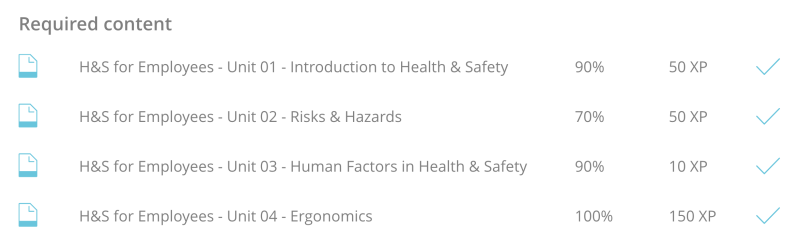
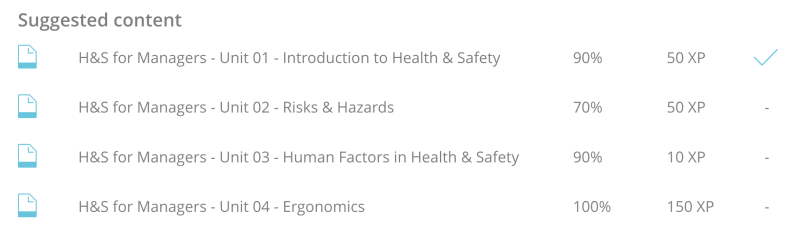
You can also tie suggested content to a Level. That’s the optional stuff. The latter is any content that may interest the learner at that stage in their development, but which isn’t essential to their progression. Why not pique learners’ curiosity by adding intriguing optional content to boost their engagement?
3. Experience Points
Admins can set an Experience Points (XP) target for each Level. Learners must achieve this target to level up. XP can be earned by learners for pretty much any type of interaction with the LMS, including posting on the message board or downloading content.
In addition, associating an immediate reward (in this case XP) with an interaction within the LMS has shown to release dopamine, i.e. the “feel-good” hormone. Learners then begin to associate the learning event with positive emotions, encouraging them to repeat it. In other words,. the learners start to crave more content.
It’s worth setting XP as a requirement for the Level. After all, these points show you how engaged each learner is with your LMS. By encouraging people to chase those valuable Experience Points, you incentivise learners to engage with all aspects of the LMS, rather than simply ploughing through training content.
4. Progress Bar
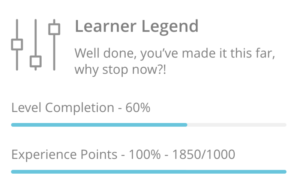
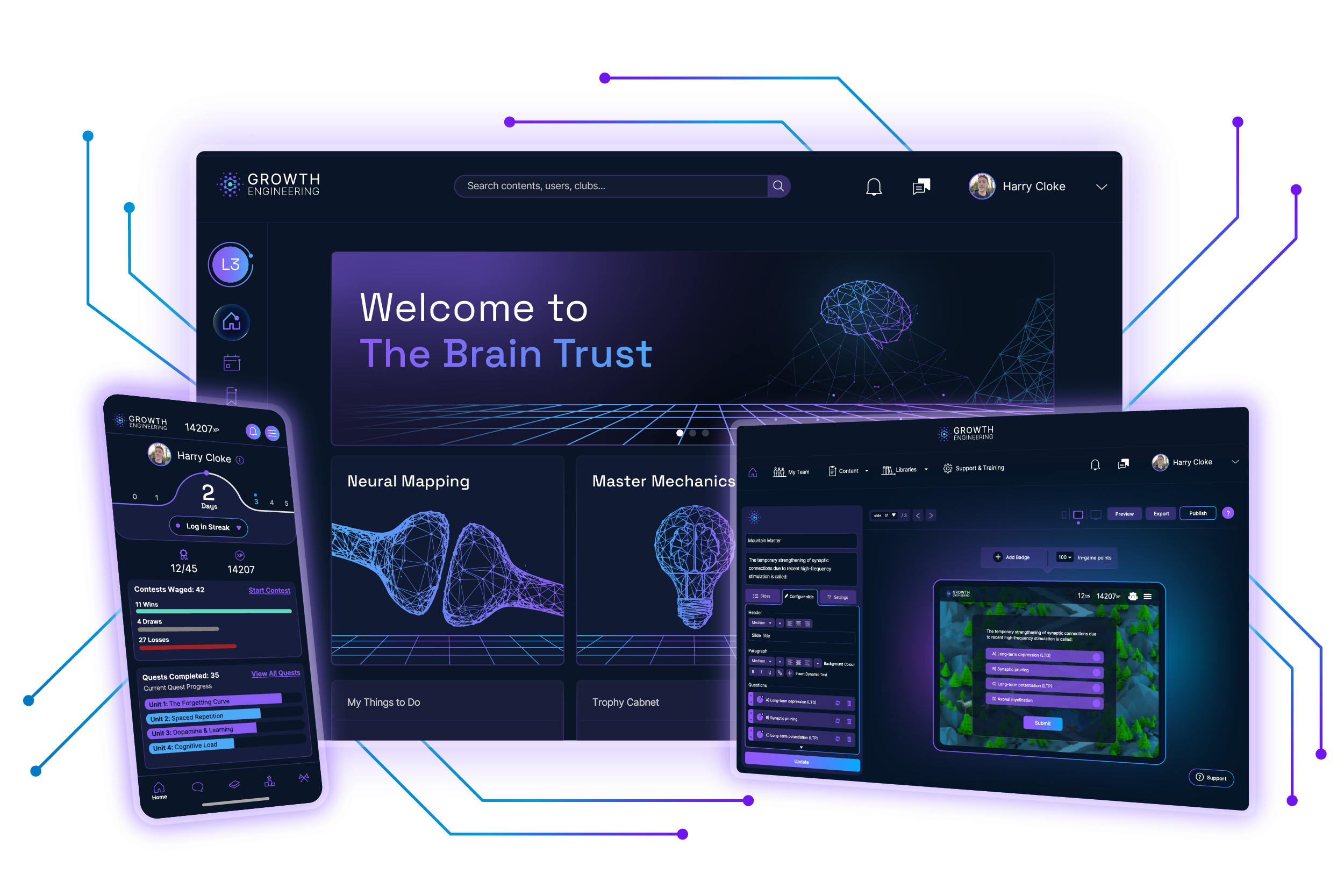
Indicators, such as the Level Progress Bar or Progress Arc, are prominent on Growth Engineering LMS. The Progress Bar shows learners how far they’ve come and how much they still need to do to level up.
It is a strong motivator as studies have shown that people are twice as likely to achieve an objective if they are given a sense of advancement towards their goal.
For example, if learners know success is just one training item away, they are more likely to put in the effort to reach it and they will reach it sooner rather than later. This effectively taps into a white hat driver of the Octalysis Framework, which consists of a learner’s desire for progress and advancement.
5. Fully Customisable
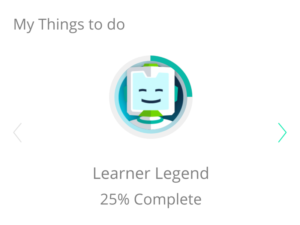
Personalise your Levels to create that extra layer of meaning. Design each Level to fit your company’s brand, training scheme or internal progression levels. For example, you can choose a meaningful name for each Level which reflects the target level or scheme topic.
Need some inspiration? ‘New Recruit Ninjas’ for onboarding training. ‘Policy Power’ for getting to grips with company policies. ‘Health & Safety Heroes’ for…well, the clue is in the name!
Whatever you need to engage Learners and make them feel comfortable, make it happen! Small details like this create powerful Epic Meaning, which ensures training resonates with your Learners’ day-to-day job requirements.
Epic meaning is a sense of purpose that drives us to do something that matters. Ultimately, customising levels lets you create Epic Meaning at every level of your organisation. This ensures that your learners are motivated by the work they do, and understand how they impact the wider mission of your organisation.
Note: If you would like to find out more about how Epic Meaning can impact learning initiatives for your organisation, please refer to Epic Meaning – The Secret Sauce In Engagement.
Final Words
As you can see, levels are a really powerful tool to reward and motivate learners. 79% of employees claim they have gained motivation and purpose at the workplace because of gamified activities. They help ensure that each learner is directed towards realistic challenges and relevant content. This makes sure that your learning initiatives are targeted and effective.
Levels help L&D teams create logical learning paths. Additionally, by creating a continuous development programme in this way, you are effectively automating the learning process.
Your learners are able to progress through the content at their own pace, thus reducing the need for regular training interventions. This removes a huge amount of workload from the L&D teams, allowing them to focus on designing ways to make training more effective!
Eager to learn more? If you’re ready to take your training to the next level, download our comprehensive gamification guide by clicking here!