

A Sales Academy is an all-in-one approach to the training and development of sales teams. This online sales training solution boosts engagement, improves knowledge and skills, and demonstrates a measurable return on investment.
The Sales Academy solution fulfills the needs of entire sales training programs and aims to improve performance through:
- Benchmarking individual performance and knowledge through sales competency framework.
- Focusing on the needs of individuals.
- Engaging the staff and encouraging participation.
- Ensuring training engages users through knowledge sharing and competitive elements.
- Gathering feedback to ensure the sales organisation ‘owns’ the integrated program.
- Measuring results through return on investment.
Benchmarking Sales Performance
Often, the only benchmark within sales is sales targets. Achieving sales targets shouldn’t be the only focus for companies looking to grow and develop. The sales staff need to know which skills can help them improve their performance.
Competencies let the organisation show the individual the expected areas and levels of performance. This gives the individual a map showing which behaviours are valued, recognised and rewarded.
A Sales Academy contains a set of customisable competencies. This competency-based system offers several benefits:
- Clearly defined and measurable performance goals
- Fair and open appraisal and recruitment processes
- Clearly connected organisational and personal objectives
- Measurable and standardised processes across the organisation
How to Benchmark Sales Performance
Sales functions should have no more than 12-14 areas. Each competency area needs to be specific and measurable. The staff are benchmarked on a score of 1-5 against each competency area. For instance:
Negotiation skills:
- Fails to negotiate or accepts the customer’s demands at the expense of their own needs.
- Attempts to negotiate but does so at the expense of the relationship without gaining any satisfactory solution.
- Uses effective techniques to negotiate and usually does so without minimal conflict or dispute arising,
- Usually negotiates effectively without compromising their own position too early and recovers any potential loss of the relationship with the customer.
- Demonstrates the ability to negotiate effectively in all situations by reaching a win-win situation and maintaining the relationship with customers throughout the process.
Engaging Salespeople with their Training
Getting a buy-in from sales staff and managers is vital in embedding sales training programs. Involving staff in the competency assessment lets them see where they can make improvements. They are more likely to commit to the training solution when they see where the gaps lie.
Benchmarking and assessing staff should be done via:
- 360 degree
- Individual
- Manager
This clarification lets you start to put a sales training program in place and plug the gaps.
Using eLearning as part of a blended training programme
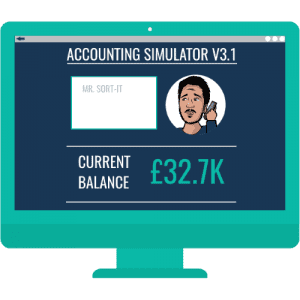
A recent survey by Huthwaite International found that 87% of classroom based learning is lost after 30 days. Training interventions should be cost effective and have high impact. An online sales training solution lets salespeople practice and discuss their training. In the case of Negotiation, they can learn the framework for preparing and delivering a good negotiation, which they can practice in shorter, high-impact workshops.
To engage sales staff, training should relevant to their roles and help explore knowledge through their own sales environment.
Traditional eLearning concentrates on knowledge delivery: Learner’s involvement is sought through click-and-reveal activities and the occasional quiz.
Good training focuses on the learner’s journey. Here, the learner can draw examples from their own work life and apply it to the concepts discussed, helping them grasp it more easily.
Transforming Culture with Online Sales Training
Training should instil a change of culture by continually reinforcing the content among the staff. Training must be reinforced continually with tests, quizzes and knowledge sharing.
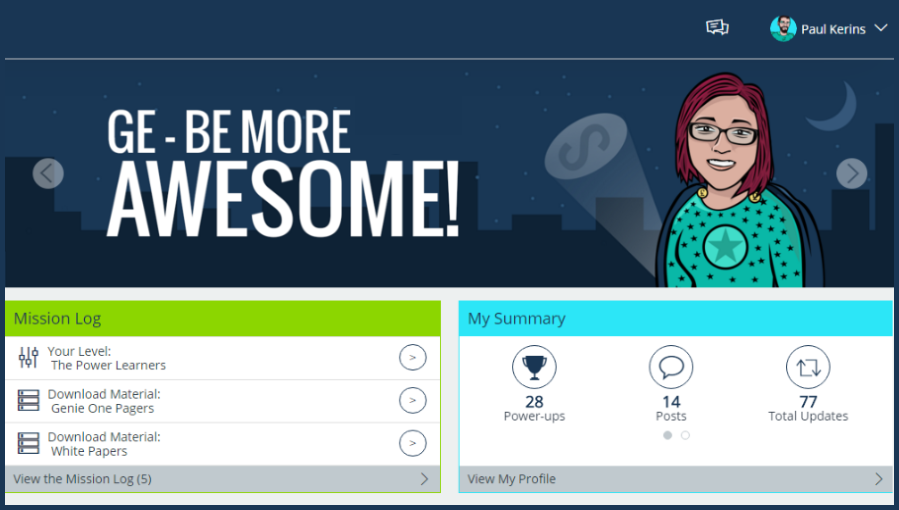 To keep learners engaged they should be inspired to share and be recognised for their learning. The staff need a sense of achievement. Creating a competition within the sales team is an ideal way to embed culture change.
The Sales Academy employs technology to do more. Companies can utilise the platform to:
- Assess staff online and report and benchmark results
- Automate the process of delivering eLearning content
- Schedule classroom training
- Test knowledge
- Share training and other content
- Assess knowledge uplift online and certify participation
- Conduct survey and capture feedback
A Sales Academy achieves this by:
- Levels: bring in pacing, status and ‘unlock’. Levels punctuate the action and unlock opportunities.
- Rewards: encourage regular participation as they are earned as a direct result of interaction with eLearning modules.
- War stories and experience: suggests quality, reputation, and influence, and marks progress, reflects mastery and skill. You can use these to reward loyalty and frequency and drive ‘gatherer’ competition.
- Leaderboards introduce public, visible progress and achievement, and reflect quality, reputation, and influence. They showcase your most skilled and devoted learners and drive ‘hunter’ competition.
How does Sales Academy help measure the results?
- Feedback: How good was the programme? Feedback on the training needs to feed into the Academy’s internal conveyor belt, which continuously absorbs suggestions and improves the content.
- Learning: How effective was learning? Quiz functionality on the LMS helps evaluate the content’s effectiveness.
- Behaviour: How much have the learners’ skills improved? Training is only effective if it affects positive behaviour. The assessment comes from how the training has changed behaviour, as observed and assessed by colleagues or a line manager.
- Results: How beneficial was it to the business? Any training should have a business goal. How has your training translated into organisational benefits?
The Academy Learning Management System is a gamified social training platform that puts learner engagement first. Our Sales Academy package includes all of the functionality that makes the Academy LMS an award-winning platform, plus internationally recognised sales and marketing qualifications. Want to find out more? Just click the button!