
 You can’t manage what you can’t measure. If you want your sales team to have the skills and behaviours they need to generate more sales, you have to know where their competencies lie and what you can do to improve them.
A solid sales competency framework helps you do just that. By focusing and reviewing each salesperson’s capability and potential, you can:
- Build a profile of the ideal salesperson
- Benchmark the sales team against this model
- Identify training needs for each sales person based on their gaps
- Measure progress on each salesperson’s development
Most importantly of all, a sales competency framework lets you deliver a development programme with the potential to change behaviour in your organisation for the better, resulting in improved performance and a measurable return on investment.
What Is a Sales Competency Framework?
A competency framework is a set of skills, knowledge and behaviour. Competencies clearly show the individual what’s expected from them in terms of performance. You can think of a competency framework as a map of the behaviours that are most valued within the organisation.
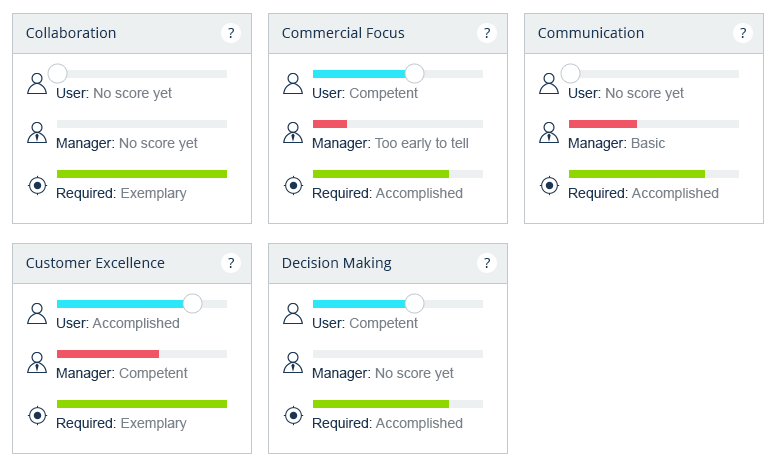
In a sales environment, a clear competency framework has a direct impact on the bottom line for the whole organisation. It lets you put the right people in the right roles and identify opportunities to improve their performance. This makes it an essential part of any sales training programme.
Why Do You Need a Sales Competency Framework?
A sales competency framework acts as a guide for all salespeople and it helps them identify the areas in most need of development. Used properly, the framework lets you deliver personalised training programmes with real meaning, yet many learning managers take the easy way out, and give the exact same training to everyone.
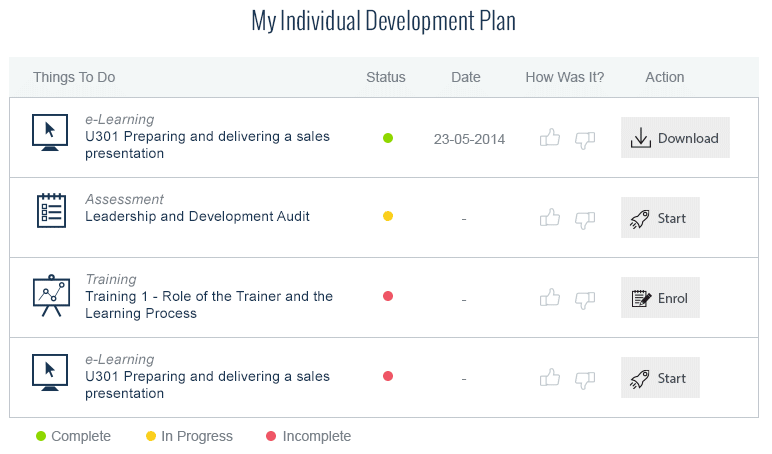
It is now widely accepted that this ‘sheep-dip” approach to sales training has little or no impact on results. It doesn’t allow for differences in the individual’s experience level, skills, or job role. Real success comes from focusing training and development on the individual sales person. By concentrating on the individual’s needs, the training will be much more relevant for each person and have a far greater impact on performance.
How Do You Build a Sales Competency Framework?
Now that you know what a sales competency framework is, you’ll probably want to know how to create one. Here’s a 10-step guide to help you create the perfect framework for your sales team:
1. Identify the competencies that make up your ideal sales profile.
You should have around ten competencies and they all need to be measurable. Your salespeople should be able to look at each one and know how to demonstrate them.
2. Involve all relevant Sales Managers in the process.
By approaching the task as a collaborative effort, your team will feel a sense of ownership and they’ll have a greater interest in making it work.
3. Ensure that the competencies are tailored to your business.
You might have a number of common competencies for the sales team as a whole, but make sure they’re adjusted to suit the job role if needs be.
4. Keep it simple.
If it’s too complicated, your salespeople will waste valuable time trying to decipher it. If they can understand their competency framework quickly and easily, it’ll be more effective.
5. Make sure your delivery mechanism is efficient.
Paper-based assessments might be a quick fix, but they can get very messy. An online training platform requires an initial investment, but in the long run, it will save you money and time.
6. Determine the most effective way of benchmarking each individual.
You might choose to do this through assessment centres, manager assessments or by using an external provider. An online performance management suite can take a lot of the hard work out of benchmarking and it also gives the salesperson a clearer idea of where they need to focus their efforts.
7. Communicate widely on the launch.
Whichever way you decide to promote your framework, it won’t be effective if nobody knows about it. Once again, an online platform will save a lot of time and confusion and it will also give you visibility over who has accessed the content and who hasn’t.
8. Make sure there’s a training and development programme in place.
You need to plug knowledge gaps once the competency assessment is completed. Whether you use an online training platform, face-to-face classroom sessions, or a blended solution, you need to make sure your salespeople get the training they need to improve their competencies.
9. Identify strengths as well as weaknesses.
Make sure you have a plan in place to capitalise on your most powerful assets. A competency framework shouldn’t just be something to help you figure out who isn’t pulling their weight. Use it to find out who the experts are and then use these experts to mentor those with less experience.
10. Identify and remove the causes of friction at all stages.
You can save a lot of resources by choosing a mechanism that can recommend the development plan automatically rather than needing manual management intervention.
Final Words
Looking for an easier way to improve your salespeople’s competencies? Download our Guide to Gamification to find out how you can use gamification to engage and inspire your learners!