
A good learning game is much the same as a successful eLearning unit. At their core, learning games should be built to satisfy some wider organisational goal. For most learning managers, this is the bottom line that defines whether or not they’ve done their jobs.
Although this is the point of a training programme, it’s all too easy to get hung-up on the end result. Many learning managers are driven to despair by learning efforts that yield low completion rates and that don’t appear to have any effect on behaviour. However, by focussing on the bottom line these learning managers are forgetting about the most important part of the puzzle – the learners themselves.
Learning games have the edge on traditional eLearning because they are designed with the learner experience in mind. Instead of spoon-feeding a tasteless gruel of dull content to an uninterested audience, learning games act as a delicious and irresistible cake that the learners simply can’t ignore!
So, how do you know your cake is delicious and irresistible enough? To answer that question, let’s look at the characteristics of a successful learning game.
It Encourages Engagement
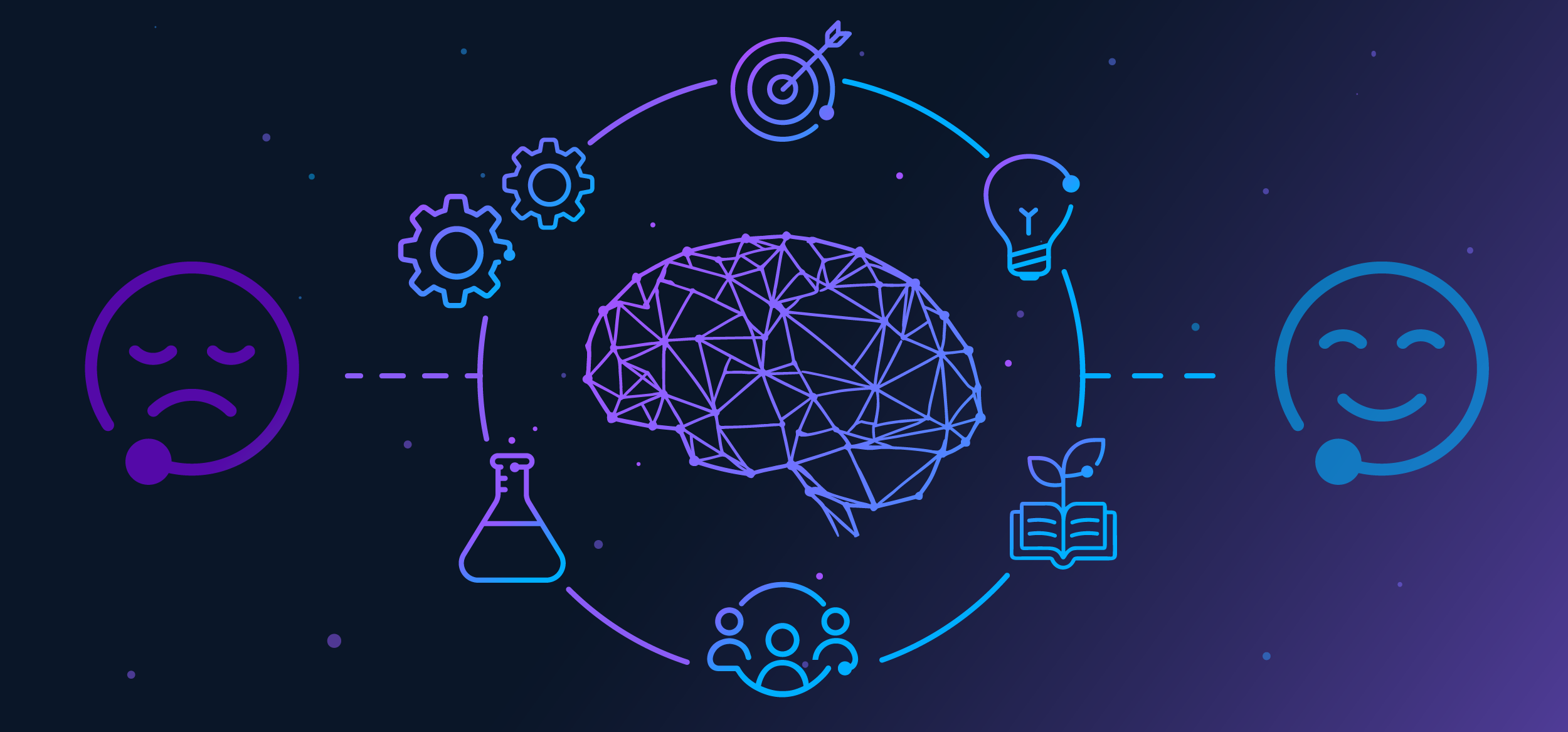
 Your first measure of success is the most important one – do your learners actually care about it? A good learning game will engage your learners and this will initially be reflected in a marked improvement in completion rates.
Secondly, if your learners have enjoyed the experience, they will say so. If you have an in-house social network, you can expect to see a lot of buzz. Even without such a platform, word of your learners’ excitement will find its way to you somehow. Can you say the same for some dull, click-through eLearning..?
 It Provokes Thought
Bombarding your learners with facts and figures is all very well, but if you want to change the way they think and behave, you need another approach. Active participation in the learning material is a more effective way of getting the message across to your learners.
Games, by their nature, are interactive. A good learning game should include a large element of interaction and it should provide an opportunity for your learners to reflect on their own experience. Not only does this provoke thought, but it also helps craft a unique personalised experience for each learner.
It Improves Retention
 One of the main drivers behind any training programme is creating a real change in learner behaviour. This is impossible if the learning doesn’t stick. Ebbinghaus’ Forgetting Curve hypothesis describes the exponential loss of knowledge after something has been learned. Although there’s no magic formula to completely negate this effect, there are ways to mitigate it.
Learning games help by creating an additional context around the learning material and acts as a subconscious mnemonic technique. In many cases, the learning objective won’t necessarily be linear. With a learning game, the learner can associate each step of the learning journey with a similar stage in the game.
Coupled with the increase in engagement and the elements of personalisation, a really great learning game can reinforce the overall learning objective on three fronts. That’s good news for the business, good news for you and most importantly, great news for your learners!
Want to see what an awesome learning game looks like? Why not create one for yourself? Pop over to unleashthegenie.com and sign up for a free 30-day demo!